

Finding the Best Low Carb Protein Bars in Canada
Ever walk down the supplement aisle and just stare at the wall of protein bars? It can be overwhelming, especially when you’re trying to find something high in protein that won't blow your carb count for the day.
The truth is, the best low carb protein bars are the ones that hit a few key marks: quality protein sources (like whey isolate), genuinely low net carbs (we're talking under 10g), and sweeteners that don't upset your stomach. It's why brands like Quest and Grenade have become so popular here in Canada—they just get it right.
Navigating the World of Low Carb Bars
This guide is designed to cut through all that noise. We'll help you find the right bar for you—whether you're following a strict keto diet, need a fast post-workout refuel after a tough session at GoodLife, or just want a healthier snack on hand.
We'll break down exactly what to look for on the label, make sense of all the different sweeteners, and compare some of the top choices available right here in Canada, including the always-popular Quest Bars and Grenade Bars.
Here at SupplementSource.ca, we’ve tried pretty much all of them. We’re a Canadian company, through and through, and our goal is to give you practical, no-fluff advice to help you pick a bar that actually fuels your goals. Let's find your new favourite.
Why Low Carb Bars Are a Fitness Staple
Low carb protein bars have come a long way from being some niche health food trend. These days, they’re a cornerstone of modern nutrition for Canadian athletes, busy professionals, and pretty much anyone serious about their health. Their real power is in their simplicity: they deliver muscle-supporting protein and satisfying fibre without the blood sugar rollercoaster that comes with high-carb snacks.
This combo of convenience and macro control makes them an incredibly versatile tool to have in your nutritional arsenal.
Think about it: You're trying to hit your protein goal for the day but you’re stuck in back-to-back meetings. A quick protein bar delivers 20 grams of quality protein in the time it takes to open a wrapper—no shaker bottle, no mess.
This on-the-go efficiency is exactly why they’ve become a non-negotiable for so many active lifestyles.
Fueling Performance and Recovery
When you need to crush a 3 PM craving without derailing your diet, a low carb bar is the perfect choice. It can satisfy a sweet tooth while providing lasting energy, helping you steer clear of the Tim Hortons run and stay on track with your fat loss or muscle-building goals.
It's the same story after a tough workout. Your muscles are screaming for nutrients to start the repair process, and a bar is often faster and more convenient than mixing a shake. You get an immediate hit of protein to kickstart recovery. They're also a lifesaver when you're travelling or just navigating a hectic day, ensuring you never have to compromise your nutrition.
A Growing Canadian Trend
It’s no surprise that the demand for these snacks is booming. The Canadian low carb protein bar market is growing fast, reflecting a major shift in our dietary habits as more of us look for snacks that fit low-carb or ketogenic lifestyles. The market is actually projected to hit $56.2 million by 2033, with over 45% of Canadian consumers regularly including protein bars in their diets.
And it's not just about the bars themselves. People are getting smarter about their entire meal prep game, looking for things like space-saving food containers to optimize their active life.
Here at SupplementSource.ca, we see this demand firsthand. That’s why we stock a massive variety of the best low carb protein bars at Canada's lowest prices. Whether you're hunting for a specific brand or just need to stock up on a budget, our fast, reliable shipping gets you the fuel you need without the wait.
How to Read a Protein Bar Label Like an Expert
The flashy marketing on the front of a protein bar wrapper tells a story, but it's the nutrition label on the back that gives you the facts. A bar can shout "keto-friendly" in bold letters, but the numbers are what really count. If there’s one skill you need to master, it's learning to decode that label to find a bar that actually fits your goals.
It's about looking past just the big protein and carb numbers. We’re going to dig into how to calculate net carbs, spot sneaky hidden sugars, and understand why the type of protein and fat matters. Once you get the hang of this, you’ll be able to glance at any bar and know instantly if it’s a good fit or just junk food in disguise.
Calculating Net Carbs The Right Way
For anyone on a low carb or ketogenic diet, this is the most critical calculation. Net carbs are the carbs your body actually digests and turns into glucose, which is what can affect your blood sugar. Luckily, the formula is simpler than it sounds.
Total Carbohydrates – Dietary Fibre – Sugar Alcohols = Net Carbs
Let's break it down with a real-world example. If a bar has 22g of Total Carbs, 15g of Fibre, and 4g of Erythritol (a common sugar alcohol), you'd do this: 22 - 15 - 4 = 3g of Net Carbs. That’s a massive difference and shows why high-fibre bars are so popular in the low carb world.
Keep in mind, not all sugar alcohols are created equal. Some, like maltitol, can still have a moderate impact on blood sugar and are notorious for causing digestive issues in some people. Your best bet is to look for bars using erythritol, xylitol, or stevia, which are generally well-tolerated and have almost no glycemic impact.
Spotting Hidden Sugars and Unpacking Protein
Food manufacturers can be pretty clever with their ingredients. Sugar hides under a lot of different names, so you need to scan the ingredients list for more than just the word "sugar." Be on the lookout for these culprits that are essentially sugar in a costume:
- Tapioca Syrup
- Brown Rice Syrup
- Honey or Maple Syrup
- Date Paste
- Fructose or Cane Juice
While some of these, like date paste, come from whole foods, they still add to your total sugar and carb count.
Next up, check the protein source. This tells you a ton about what the bar is good for.
- Whey Protein Isolate: This is a fast-digesting, highly-filtered dairy protein. It’s perfect for post-workout recovery because it gets to your muscles quickly to start the repair process.
- Milk Protein Isolate/Casein: These are slower-digesting dairy proteins. They provide a more sustained release of amino acids, which makes them great for a meal replacement bar meant to keep you full for hours.
- Plant-Based Blends: Usually a mix of pea, brown rice, or seed proteins. These are an excellent choice for anyone with dairy sensitivities and offer a complete amino acid profile when blended properly.
Nailing down your protein needs is fundamental to seeing results. To get a better handle on your daily targets, check out our in-depth guide on how to calculate protein intake for muscle gain.
Analyzing the Fat Sources
Finally, don't ignore the fats. In a low carb bar, healthy fats are a huge plus—they provide sustained energy and help keep you full. You want to see ingredients near the top of the list like:
- Nuts and Nut Butters (almonds, peanuts, cashews)
- Seeds (pumpkin seeds, chia seeds, flax seeds)
- Coconut Oil or MCT Oil
These are nutrient-dense sources that support your overall health. Be wary of bars that lean heavily on less ideal oils like palm kernel oil or hydrogenated oils.
To make this even easier, here’s a quick-reference table to help you decode any label on the fly.
Decoding the Low Carb Protein Bar Label
| Nutrient | What to Look For | Why It Matters for Low Carb Diets | Pro Tip for Canadians |
|---|---|---|---|
| Net Carbs | Under 10g for snacks, under 5g for strict keto. | This is the number that impacts blood sugar and ketosis the most. Lower is almost always better. | Canadian labels list fibre and sugar alcohols clearly, making the Net Carb calculation straightforward. |
| Fibre | At least 5g, ideally from natural sources like soluble corn fibre or chicory root. | High fibre lowers the net carb count and promotes digestive health and satiety, keeping you full longer. | Look for bars from Canadian brands like Quest or Good To Go that often prioritize high-fibre formulas. |
| Sugar | As close to 0g as possible. Ideally under 2g. | Hidden sugars can knock you out of ketosis and trigger cravings. The lower, the better. | Be skeptical of "naturally sweetened" claims and always check the ingredients for syrups or fruit pastes. |
| Protein | 15-20g+ per bar. | The primary goal of a protein bar! This range supports muscle repair and satiety effectively. | Whey isolate from Canadian dairy is top-notch. Brands like Allmax often use high-quality local sources. |
| Fat | 10-20g from whole food sources like nuts, seeds, or MCT oil. | Healthy fats provide sustained energy and help keep you feeling full between meals. | Many Canadian-made bars use nut butters as a base, which is a great sign of a quality fat source. |
With this knowledge, you can walk up to that wall of protein bars not with confusion, but with the confidence of an expert. You'll know exactly what to look for and what to avoid.
Choosing the Right Bar for Your Specific Goal
Not all low carb protein bars are built the same, and the "best" one really boils down to why you're reaching for it. The perfect bar to crush after a heavy squat session is a world away from the one you'd grab to survive a long afternoon meeting. Making the right call means matching the bar's nutritional profile to what you need in that exact moment.
Think of it this way: you wouldn't use a hammer to turn a screw. In the same vein, grabbing a high-calorie, fat-dense keto bar for a light pre-cardio snack probably isn't the smartest move. This section is all about helping you develop that situational awareness—so you can pick the right tool for the job, every single time.
This decision tree helps you see which path to take based on your main objective, whether that's sticking to a keto diet, fuelling muscle gain, or finding a quick meal replacement.
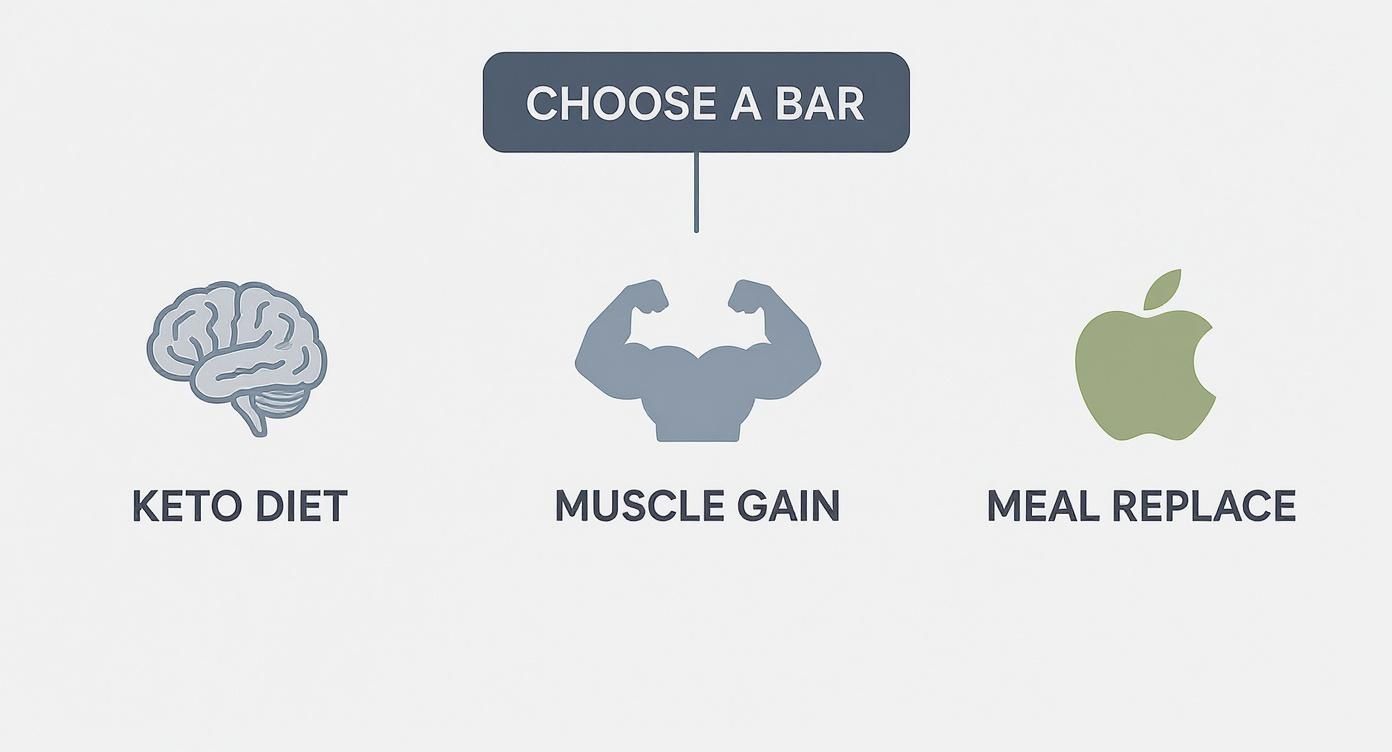
As you can tell, the ideal macros and ingredients shift quite a bit depending on your goal. Picking the right one means the bar is actively working for you, not against you.
Low Carb Bar Use-Case Comparison
To make it even clearer, let's break down how to match a bar to your goal. The table below outlines what to look for based on four common scenarios, helping you pinpoint the perfect bar for any situation.
| Use-Case | Ideal Protein | Ideal Net Carbs | Key Ingredients to Look For | Example Scenario |
|---|---|---|---|---|
| Post-Workout Recovery | 20g+ | <10g | Whey protein isolate, minimal fat | Just finished a tough lifting session and need to kickstart muscle repair. |
| Strict Keto Fuel | 10-15g (Moderate) | <5g (Ultra-low) | MCT oil, nuts, seeds, high fat | Need a high-fat, low-carb snack to maintain ketosis on the go. |
| Meal Replacement | 15-20g | <15g | High fibre (10g+), healthy fats, balanced macros | Stuck in back-to-back meetings and have no time for a proper lunch. |
| Afternoon Snack | 10-15g | <10g | Natural sweeteners, great flavour, <200 calories | Fighting the 3 p.m. craving for something sweet at the office. |
This quick guide shows that a little label-reading goes a long way. Now, let's dive deeper into what makes each of these bars tick.
The Post-Workout Recovery Hero
You just finished that last rep. Your muscles are screaming for nutrients to start the repair and growth process. This is prime time for protein, and you need it fast.
Your ideal post-workout bar should have:
- High Protein Content: Look for 20 grams or more to give your muscles enough amino acids for protein synthesis.
- Fast-Digesting Protein: Whey protein isolate should be high on the ingredient list. It's absorbed rapidly, getting to your muscles much quicker than other sources.
- Low Fat: Healthy fats are great, but they slow down digestion. Right after a workout, you want that protein absorption to be as fast as possible, so a lower-fat bar is your best bet.
A bar like the ever-popular Grenade Bars is a perfect example. It delivers a solid protein punch with minimal sugar, making it a go-to for countless Canadian gym-goers.
The Strict Keto Fuel Source
If you’re all-in on the ketogenic lifestyle, your priorities are completely different. The name of the game is keeping your body in ketosis, which means carbs have to be rock bottom while fat intake stays high.
A true keto-friendly bar will feature:
- Ultra-Low Net Carbs: You need to be looking for bars with 5g of net carbs or fewer. Every single gram counts when you're trying to stay in ketosis.
- High Healthy Fats: The bar should be loaded with good fats from sources like MCT oil, nuts, and seeds to provide that long-lasting energy.
- Moderate Protein: This might sound counterintuitive, but too much protein can be converted into glucose (a process called gluconeogenesis), which can risk kicking you out of ketosis. A moderate amount, around 10-15g, is usually the sweet spot.
These bars are designed to be dense and satisfying, keeping you fuelled up without messing with your blood sugar.
The Hectic Day Meal Replacement
Let's face it, sometimes a real meal just isn't happening. You’re running between appointments or chained to your desk, and you need something substantial that won't leave you raiding the pantry an hour later. This is where a proper meal replacement bar comes in.
For a bar to truly stand in for a small meal, it needs to do more than just pack in protein. It has to offer balanced nutrition and, most importantly, keep you feeling full and satisfied for hours.
Look for a bar with a well-rounded profile:
- Balanced Macronutrients: Aim for a solid mix of protein (15-20g), healthy fats (10g+), and fibre.
- High Fibre Content: This is non-negotiable. You want to see at least 10-15g of fibre to promote satiety, slow down digestion, and keep hunger away.
- Higher Calorie Count: It just makes sense. A meal replacement should have more calories than a simple snack, typically landing in the 250-350 calorie range.
The Afternoon Craving Crusher
It’s 3 p.m. The vending machine is calling your name. You need a snack—something that satisfies your sweet tooth and gets you to dinner without derailing your diet. This is the moment for a lighter, smarter choice.
The ideal snack bar is:
- Lower in Calories: Something around or under 200 calories is the perfect fit.
- Moderate Protein: 10-15g of protein is more than enough to curb hunger and keep you on track.
- Great Taste and Texture: Let's be real, if it's going to compete with a chocolate bar, it has to be delicious. This is where many brands shine, offering incredible dessert-like flavours that feel like a real treat.
Choosing the right bar for the right moment turns it from just a snack into a strategic tool for your health and fitness journey. At SupplementSource.ca, we stock a massive variety to match every one of these goals, all shipped fast across Canada so you’re always prepared.
Score the Best Deals on Protein Bars in Canada
Alright, you’ve figured out how to read a label and find the perfect bar for your goals. Now for the really good part: getting the best price without any nasty surprises at checkout.
For anyone buying supplements in Canada, shopping with a Canadian retailer like SupplementSource.ca is just the smart play. It’s the easiest way to dodge those unexpected duties and eye-watering cross-border shipping fees that can wipe out any deal you thought you were getting.
It’s all about getting the most bang for your buck without cheaping out on quality. Here’s how you do it.
Sure, you can grab a protein bar at any major supermarket—they make up about 67% of the market share in Canada for a reason. But savvy shoppers know the real deals are found online. With more than half of Canadians reaching for a protein bar as a quick breakfast, the hunt for a good price is always on. You can discover more insights about the Canadian protein bar market here if you're curious about the trends.
This is exactly where a dedicated Canadian supplement store pulls ahead of the pack.
Unlock Savings in the Clearance Section
One of the best-kept secrets for scoring killer deals is hitting up the clearance section. This is where you’ll find hidden gems—overstocked items, last season's flavours, or bars with updated packaging—all at a serious discount.
At SupplementSource.ca, our Clearance Zone is the stuff of legend. It's not just a random collection of odds and ends; we're constantly adding top-tier brands, giving you a chance to load up on your favourites for way less than retail.
It’s the perfect excuse to finally try that new brand you’ve been eyeing up or to grab a whole box of a bar you already love at a price you won’t see anywhere else.
Don't Overlook Short-Dated Deals
Here's another pro tip for saving cash: check out the Short-Dated Section. These are products getting close to their best-before date, but they're still perfectly good and just as effective. If you burn through bars pretty quickly—say, one a day after your workout—this section is an absolute goldmine.
Why pay full price for the exact same product when you can get it for a fraction of the cost, just because you plan on eating it in the next couple of months? It’s a no-brainer for your budget. Plus, with our fast shipping across Canada, you'll have your deals delivered to your door long before your current stash runs out. Finding the best low carb protein bars is great, but getting them for the lowest price is even better.
Got Questions About Low Carb Protein Bars? We've Got Answers.
Even when you know the basics, a few questions always seem to pop up when you're staring at a wall of low-carb protein bars. It's smart to be curious—the little details are what make the difference. Let's tackle some of the most common questions we hear from fellow Canadians to clear up any confusion and help you shop like a pro.
Think of this as your personal cheat sheet. We'll give you straight-up, practical answers so you can feel confident in your choice.
How Many Net Carbs Should My Protein Bar Have?
This is the big one, and honestly, the right number comes down to your personal goals.
For a bar to be genuinely considered "low carb," you'll want to aim for 10 grams of net carbs or fewer. That's a solid benchmark that works for most people on a carb-conscious diet. It’s low enough that it won't send your blood sugar on a rollercoaster, making it a great pick for a daily snack or some post-workout fuel.
But, if you're following a strict ketogenic diet, the game changes. You need to be way more selective and hunt for bars with 5 grams of net carbs or less. This ultra-low threshold is critical for making sure you stay firmly in ketosis.
Can I Eat a Low Carb Protein Bar Every Day?
Absolutely, but here’s a crucial mindset shift: think of them as a powerful supplement to your diet, not the foundation of it.
They are incredibly handy for fuelling up before a workout, surviving a travel day, or just getting through a ridiculously packed schedule. But at the end of the day, the bulk of your nutrition should come from whole foods like lean meats, fresh vegetables, and healthy fats.
If you are going to have a bar daily, make it a good one with clean, minimal ingredients. It's a tool in your nutritional toolkit—use it strategically when you need it most.
Pro Tip: If you're a daily bar eater, buying in bulk is a game-changer for your wallet. Keep an eye on the Clearance Zone at SupplementSource.ca. You can often snag entire boxes of top-tier bars for a fraction of the price, which makes that daily habit much easier to afford.
Are Sugar Alcohols Bad for You?
Sugar alcohols aren't inherently "bad," but they definitely don't agree with everyone. Since our bodies don't fully absorb them, they deliver sweetness with fewer calories and a much smaller impact on blood sugar than plain old sugar.
The catch? Some types, especially maltitol, are notorious for causing digestive grief like bloating, gas, or general discomfort in a lot of people. On the other hand, sweeteners like erythritol and stevia are usually much better tolerated.
The key is simple: listen to your body. If you feel a bit off after trying a new bar, flip it over and check the sweetener on the label. It might be time to try a different brand.
What's the Difference Between Whey and Plant-Based Protein?
The main differences boil down to where the protein comes from and how fast your body can put it to use.
-
Whey Protein: This is a dairy-based protein. Whey isolate is the most filtered, fastest-absorbing version, which is why it's considered the gold standard for post-workout recovery. It gets those essential amino acids to your muscles almost immediately when they need them most.
-
Plant-Based Protein: These proteins come from sources like peas, brown rice, soy, or seeds. To create a "complete" protein with all the essential amino acids, most bars use a blend of a few different plant sources. They're an awesome choice for vegans, anyone with lactose sensitivity, or people who just find whey a bit heavy on their system.
Your choice really depends on your dietary needs, any allergies, and when you plan on eating the bar. Both can be fantastic options for crushing your protein goals.
Here at SupplementSource.ca, we believe making smart nutritional choices should be simple and affordable. We’ve brought together a massive selection of the best low carb protein bars to fit every goal and budget, all backed by our promise of the lowest prices in Canada.
Ready to find your new go-to? Explore our huge variety of protein bars and get them shipped fast, right to your door.