

Finding the Best Protein Bars for Weight Loss in Canada
When you're trying to drop a few pounds, a protein bar can be your best friend or your worst enemy. The best ones are a strategic tool: they’re high in protein (15-20g), packed with fibre (5g+), and low in sugar (ideally under 5g), all while staying in the 200-250 calorie range.
Think of it less like a magic bullet and more like a smart shortcut. It’s the perfect grab-and-go option to keep you full and protect your hard-earned muscle while you’re eating in a calorie deficit, especially on those hectic days when a proper meal just isn't in the cards.
Decoding Protein Bars for Your Weight Loss Journey
Welcome to your no-nonsense guide for picking the right protein bar for your weight loss journey here in Canada. Let's be real—walking down the snack aisle can feel like a full-time job. With so many wrappers screaming "healthy," how do you figure out which ones actually help you hit your goals?
This guide is here to cut through all that marketing fluff. We're going to break down exactly what makes a protein bar a solid choice for shedding pounds. It’s all about finding that sweet spot where a bar gives you enough protein to feel satisfied without sneaking in the calories of a candy bar. The mission is simple: feel full, fuel your muscles, and stay on track with your plan.
A great protein bar acts like a nutritional safety net. It’s the convenient, controlled-calorie option that prevents you from grabbing a high-sugar snack from the vending machine when hunger strikes mid-afternoon.
It’s no surprise that these bars are flying off the shelves. Research shows that meal replacement bars are the fastest-growing part of the market because people want convenient options that help with weight management. The top brands get it right by focusing on balanced macros—usually 15-20 grams of protein and under 5 grams of sugar—to crush cravings and support fat loss.
Knowing what to look for is half the battle. If you're looking for personalized guidance tailored to your specific goals and dietary needs, seeking professional nutrition coaching can be a game-changer.
But before you start shopping, you need to know your own numbers. Not sure how much protein you should be aiming for? Check out our guide on how much protein you need in a day to set your personal targets.
Forget the guesswork. It's time to make smart choices that actually get you closer to your goals.
Quick Guide to Weight Loss Friendly Protein Bars
To make things even simpler, here's a quick cheat sheet. Use this table as your go-to reference when you're comparing labels and trying to find a bar that fits your weight loss plan.
| Nutritional Target | Ideal Range | Why It Matters for Weight Loss |
|---|---|---|
| Total Calories | ~200–250 kcal | Fits easily into a calorie-controlled diet without derailing your progress. |
| Protein | 15–20g or more | Keeps you feeling full (satiety), helping preserve lean muscle mass during a deficit. |
| Fibre | 5g or more | Aids in digestion, improves fullness, and helps stabilize blood sugar to fend off cravings. |
| Total Sugar | Under 5g | Minimizes blood sugar spikes and crashes that can lead to more hunger and cravings. |
This table lays out the core numbers to keep in mind. If a bar hits these targets, you're on the right track to making a choice that supports, rather than sabotages, your hard work.
Reading the Nutrition Label Like an Expert
The real secret to picking a great weight-loss protein bar isn’t on the flashy front wrapper—it’s tucked away in the nutrition facts panel on the back. Forget the marketing hype for a second. Learning to decode that little white box is the single most powerful tool you have for making a smart choice.
Think of yourself as a detective. Your mission is to get to the truth of what you’re actually eating, and I’ll show you exactly what clues to look for.
The Protein to Calorie Ratio
First thing to check, and honestly the most important, is the protein-to-calorie ratio. This number tells you how much protein you’re getting for your calorie "budget." A bar packed with protein for fewer calories is exactly what you want to support muscle while you’re in a deficit.
A simple rule of thumb for a weight-loss-friendly bar is to look for at least 1 gram of protein for every 10 to 15 calories. So, for a 200-calorie bar, you’d want to see a minimum of 15-20 grams of protein.
This quick calculation alone will help you instantly separate the legitimate performance snacks from the glorified candy bars.
Hunting Down Sugar and Fibre
Next up, let's talk sugar and fibre. These two can make or break a bar's effectiveness for your goals. Too much sugar sends you on an energy roller coaster and sparks cravings, while fibre is your best friend for feeling full and satisfied.
- Sugar: Aim for a bar with less than 5 grams of total sugar. You really have to watch out for "added sugars," which are often listed separately. Keeping sugar low helps you avoid that nasty blood sugar crash that has you raiding the pantry an hour later.
- Fibre: Look for 5 grams or more of fibre. Fibre is a game-changer for appetite control because it slows down digestion and helps you feel fuller for longer.
This low-sugar, high-fibre focus isn't just a hunch; it's a huge trend. A 2023 market analysis showed that over 60% of health-conscious shoppers were specifically looking for bars with under 5 grams of sugar and more fibre to help with satiety. If you're interested in how consumer habits are changing the game, you can dive deeper in this detailed North American report.
This handy visual breaks down the key checkpoints for analyzing a protein bar when weight loss is the goal.
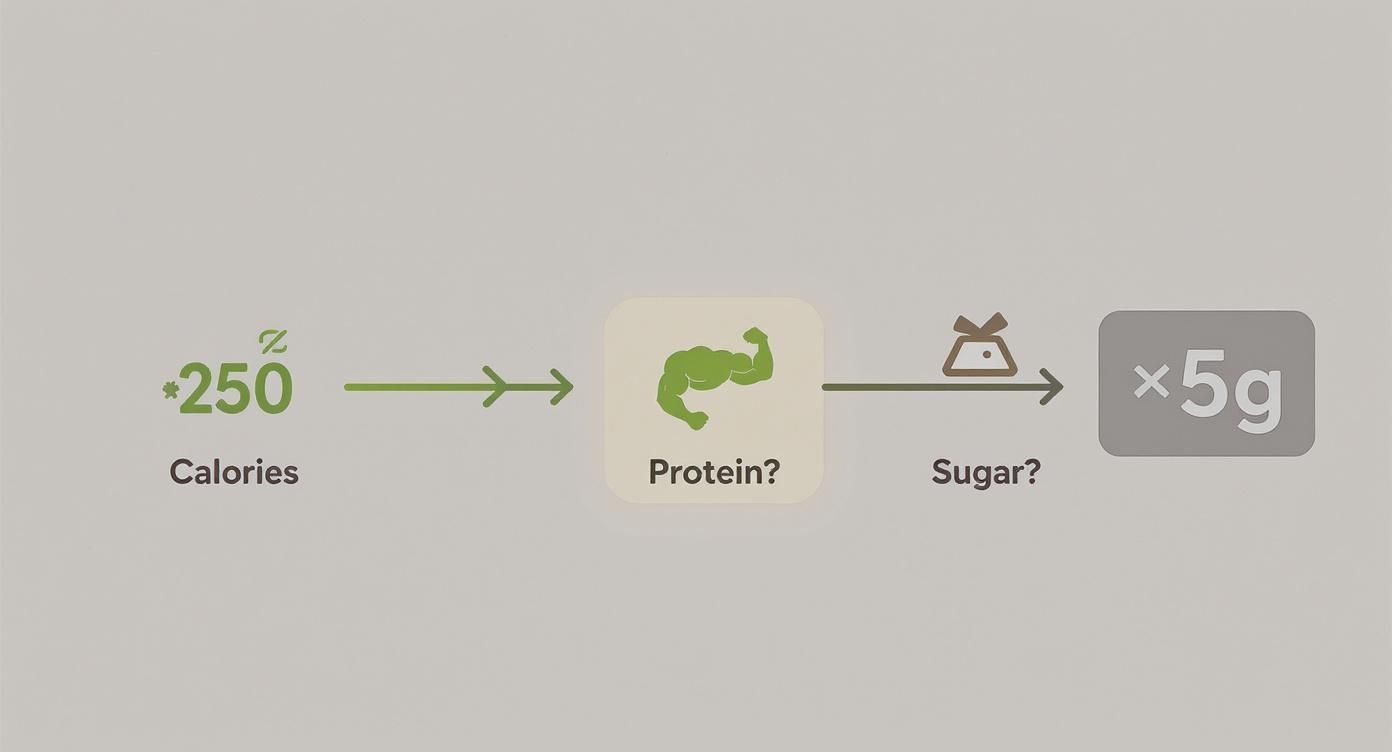
The process is pretty straightforward: if a bar passes the calorie, protein, and sugar tests, it’s probably a solid choice. Once you get these three key numbers in your head, you’ll be able to glance at any option on the shelf and know right away if it's going to help or hinder your progress.
Common Mistakes to Avoid When Choosing Protein Bars
It's shockingly easy to get duped by clever marketing. You see a wrapper with earthy tones and buzzwords like “natural” or “plant-based,” and your brain instantly files it under “healthy.” This is the classic “health halo” effect, and it’s one of the biggest traps when you’re on the hunt for a protein bar that actually helps with weight loss.
A bar can be gluten-free, organic, and keto-friendly but still be loaded with enough sugar and calories to give a checkout aisle chocolate bar a run for its money. Those feel-good labels don't automatically make something a smart choice for your goals. You have to flip it over, look past the hype, and get straight to the facts on the nutrition panel.
Think of this section as your defensive playbook. It's designed to help you sidestep the common pitfalls so you can grab a bar that genuinely supports your progress, not sabotage it.
Ignoring the Ingredient List
You’ve checked the macros and they look great—but what’s actually in the bar? A ridiculously long ingredient list packed with words you can't pronounce is usually a red flag. While some additives are totally harmless, others can cause trouble.
One of the main culprits is a heavy reliance on sugar alcohols like maltitol, sorbitol, or erythritol. They’re great for keeping the sugar count low on paper, but for a lot of people, they can cause some serious digestive upset—we’re talking bloating and gas, especially in larger amounts.
If you find a bar leaves you feeling off, the sweeteners could be the reason. Generally, a shorter, more recognizable ingredient list is the sign of a higher-quality product.
Overlooking the Protein-to-Calorie Ratio
This mistake is subtle but it’s a big one. A bar might proudly announce it has 20 grams of protein, which sounds fantastic. But if it's also packing 400 calories, it's not really an efficient choice for a weight loss plan. That’s more of a meal replacement or a snack for someone trying to bulk up.
Always come back to the golden rule we covered earlier: aim for at least 1 gram of protein for every 10–15 calories. This quick check ensures you’re getting a serious protein punch for your calorie budget, which is exactly what you need to stay full and protect your muscle.
To steer clear of these traps, just run through these three defensive steps every time:
- Step 1: Question the Claims. Ignore the marketing fluff on the front. Flip the bar over and go straight to the nutrition label.
- Step 2: Scan the Ingredients. Look for a simple list. If you have a sensitive stomach, be wary of those sugar alcohols.
- Step 3: Do the Math. Take ten seconds to calculate the protein-to-calorie ratio. Does it fit your goals?
By being a critical shopper, you make sure the bar you pick is a real asset to your diet, not just a candy bar in a very clever disguise.
When to Use Protein Bars for the Best Results
Think of a protein bar as a tool in your weight loss toolkit. Like any tool, how and when you use it makes all the difference. Just because a bar fits your macros doesn't mean you should chow down on one whenever you feel like it, especially when you're trying to drop a few pounds. Getting the timing right is what turns a simple snack into a powerful ally in your calorie deficit.
Imagine your daily calorie goal as a budget. You want to "spend" those calories where they'll give you the best bang for your buck. Using a protein bar at the right moment can stop you from making a much bigger, unplanned "purchase" later on when hunger strikes.
Strategic Times to Eat a Protein Bar
So, when does a protein bar deliver the most value? It’s all about getting ahead of your body's needs and knowing where the weak spots are in your daily routine. For most of us, that means timing a bar around workouts or those predictable hunger peaks.
- As a Pre-Workout Boost: Feeling that afternoon drag right before you're supposed to hit the gym? A bar about an hour beforehand can give you that quick-release energy to power through a solid session without feeling weighed down.
- For Post-Workout Recovery: After you've put in the work, your muscles are screaming for repair. A protein bar can kickstart that process, feeding them the amino acids they need to protect your lean muscle while you're in a deficit.
- To Crush Mid-Afternoon Cravings: We all know the 3 p.m. slump. It's real. Instead of grabbing whatever's in the office breakroom, a protein bar can stomp out those cravings and keep you feeling full until dinner, which helps prevent overeating later.
A protein bar should be a planned part of your day, not a random impulse. Treat it as your "Plan B"—the perfect backup for those chaotic days when a whole-food snack just isn't happening. It's the smart move to keep one stashed in your gym bag or desk drawer.
Using Bars Without Sabotaging Your Goals
While timing is huge, you’ve got to avoid the common traps. A protein bar is there to supplement your diet, not replace the solid foundation of whole foods. A big mistake people make is relying on them as meal replacements too often. They’re a fantastic snack, but they aren't a substitute for a balanced meal.
Beyond just plugging nutritional gaps, protein bars can be a key part of your recovery strategy. For a deeper dive into how to reduce muscle soreness and recover faster, you can explore a bunch of techniques that go beyond just what you eat.
The principles of protein timing aren't just for bars, either; they apply to all your protein supplements. If you’re curious about the best times for other options, our guide on when to drink protein shakes has even more detailed insights. At the end of the day, planning your protein intake is what helps you stay consistent and crush your goals.
Finding the Best Deals on Protein Bars in Canada
Okay, so you’ve got the playbook. You know exactly what makes a protein bar a true ally in your weight loss journey. Now for the fun part: getting your hands on them without your wallet taking a hit.
As a proudly Canadian company, our whole mission at SupplementSource.ca is to bring you the best selection at the absolute lowest prices in the country. Period. Making healthy habits stick often comes down to affordability, and you need go-to options that fit your budget as well as they fit your macros.
How to Shop Smart on SupplementSource.ca
Our site is loaded with options, which is great, but it can feel a little like navigating a maze. A simple trick to cut through the noise is to zero in on brands known for their macro-friendly formulas. You'll find a massive selection from trusted names like Allmax, Grenade, and Perfect Sports right here, all with fast, reliable shipping across Canada.
And let's be real, you can't talk high-protein, low-sugar bars without mentioning a fan favourite. You can check out the full lineup of Quest Bars we carry to see just how many flavours slot perfectly into a weight loss plan. They’re a fantastic starting point for anyone who’s serious about quality ingredients.
Pro Tip: The real secret to scoring the best deals is hiding in plain sight. Our Clearance and Short-Dated sections are goldmines for incredible value. You can often snag premium protein bars at a massive discount, just because they're nearing their best-before date or we have a bit of extra stock.
This is, hands down, the smartest way to stock up. The bars are perfectly good, and it makes keeping a healthy lifestyle that much more affordable.
By using these simple shopping strategies, you can keep your pantry full of the best protein bars for weight loss without breaking the bank. With fast shipping from a Canadian company, you'll have the fuel you need delivered right to your door, ready for when hunger strikes.
Your Action Plan for Smarter Snacking
Alright, let's put all this knowledge to good use. The theory is great, but it's time to turn it into a real-world plan for your weight loss journey. Your mission, should you choose to accept it, is simple: find a protein bar that works for your taste buds, your wallet, and your macros.
This isn't about some mythical quest for the single "perfect" bar. The real goal here is to build a reliable roster of two or three go-to options. That way, you can rotate them and keep things interesting. After all, consistency is the name of the game, and having snacks you actually look forward to makes sticking to the plan a whole lot easier. You've got this.
Your Smart Shopping Checklist
Keep these five rules in your back pocket whenever you're browsing the aisles or scrolling through the options on SupplementSource.ca. Think of this as your cheat sheet for making a confident choice every single time.
- Check the Calories First: Stick to the ~200-250 calorie neighbourhood. This keeps it firmly in the "snack" category and doesn't demolish your daily calorie budget.
- Prioritize High Protein: Hunt for bars with 15-20 grams of protein or more. This is non-negotiable for staying full, fighting off hunger, and protecting your hard-earned muscle while you're cutting back.
- Hunt for High Fibre: Look for 5+ grams of fibre. This stuff is a powerhouse for digestion and an absolute game-changer when it comes to crushing cravings and feeling satisfied for hours.
- Slash the Sugar: Your target is under 5 grams of total sugar. This is crucial for avoiding that nasty energy crash and keeping empty calories out of your diet.
- Scan the Ingredient List: A shorter list is almost always a better sign. And a heads-up: if you have a sensitive stomach, be wary of a long list of sugar alcohols—they can sometimes cause a bit of bloating or digestive upset.
At the end of the day, the best protein bar for weight loss is the one that helps you consistently hit your protein goal and stay within your calorie budget, day in and day out.
You're now fully armed with the know-how to read labels like a pro, sidestep the marketing fluff, and pick snacks that are actually on your team. It’s time to seriously level up your snack game. Find a few bars you love, stock up, and take another confident step forward on your journey.
Your Top Questions, Answered
Still got a few questions floating around? You're not the only one. Here are some of the most common things we get asked by Canadians trying to use protein bars to hit their weight loss goals.
Can I Just Eat Protein Bars to Lose Weight?
While protein bars are an incredibly convenient tool, they should never be your only source of food. Real, lasting weight loss happens when you create a sustained calorie deficit through a balanced diet—think lean proteins, lots of veggies, and healthy fats.
A much smarter approach is to use a protein bar to knock out a less-healthy snack or as a perfect post-workout refuel. Trying to live off them will almost certainly lead to nutritional gaps and, let's be honest, it's just not a sustainable way to live a healthy life.
Are Plant-Based Protein Bars Any Good for Weight Loss?
You bet they are! Plant-based protein bars can be an amazing choice for weight loss, as long as they tick the same boxes as any other bar. You're still on the hunt for high protein, high fibre, low sugar, and a calorie count that makes sense for your goals.
They're a fantastic option if you're vegan, have issues with dairy, or just want to get more plant-based foods into your diet. Just be sure to scan the ingredient list for quality protein sources like pea, brown rice, or soy protein.
So, How Many Protein Bars Should I Eat a Day?
For most people on a weight loss plan, one protein bar per day is a solid, sensible limit. This helps make sure you're still getting the lion's share of your essential nutrients from whole, unprocessed foods.
Think of a protein bar as a supplement to your diet, not the foundation of it. It’s there to help you crush your daily protein target, fight off hunger between meals, or recover after a tough gym session. Your main meals should always be the priority.
Will Protein Bars Make Me Bulky?
This is probably one of the biggest myths out there, but you can officially put it to rest. Gaining serious muscle mass (or "bulk") requires a very specific recipe: intense, progressive strength training combined with a consistent calorie surplus. That means eating more calories than your body burns, day in and day out.
A single protein bar, especially when it's part of a calorie-controlled diet, isn't going to make you bulky. In fact, its high protein content does the exact opposite. It helps you hold onto the lean muscle you already have while you're losing fat, which is critical for keeping your metabolism firing on all cylinders.
Ready to put what you've learned into practice? SupplementSource.ca has the largest selection of macro-friendly protein bars in Canada, and we guarantee the lowest prices.
Explore our huge collection of protein bars and find your new favourite today!