

The Best Protein Powder for Beginners: A Simple Guide
For anyone just starting their fitness journey, the best protein powder is almost always going to be a good Whey Concentrate, Whey Isolate, or a high-quality Pea Protein. These three nail the balance between being effective, tasting great, and not breaking the bank—making them the perfect entry point into the world of supplements.
Your Simple Starting Point for Protein Powder
Walking into a supplement store, or even just scrolling through a category page online, can be overwhelming. You're hit with a wall of giant tubs, all with flashy labels and big promises. It’s enough to make you want to turn around and walk out.
Let's cut right through that noise. Your goal as a beginner is simple: find a reliable, effective protein that helps you recover from your workouts and build a bit of muscle, without any of the extra fluff. You don't need high-octane racing fuel for your daily commute to the office, right? The same idea applies here. Sticking to the basics will get you 99% of the results you're after.
The Top Three Proteins for Beginners
We'll get into the nitty-gritty of each protein type later on, but for now, let's just get you familiar with the three best options to kick off your search. These are the most popular, proven, and straightforward choices you’ll find anywhere in Canada.
- Whey Protein Concentrate: This is the undisputed champ for most beginners. It’s effective, it’s affordable, and it tastes great. It gives your muscles all the essential amino acids they need to repair and grow after a tough workout. Simple as that.
- Whey Protein Isolate: Think of this as the more refined, "leaner" version of concentrate. It goes through extra filtering to strip out most of the lactose, carbs, and fat. This leaves you with a higher percentage of pure protein, making it a fantastic choice if you have a sensitive stomach or are keeping a close eye on your calories.
- Pea Protein: This is the king of the plant-based world, no question. Modern pea proteins have come a long way—they mix well, taste surprisingly good, and pack a complete amino acid profile. It's an excellent dairy-free alternative for absolutely anyone.
When it comes to picking a starting point, the numbers don't lie. Research shows that a whopping 82.5% of young men and 51.9% of young women in Canada reach for whey protein, making it the top pick for gym-goers who just want to build strength without overcomplicating things.
Actionable Advice: Don't get stuck in analysis paralysis. Start with a simple Whey Concentrate in a flavour you know you'll enjoy, like chocolate or vanilla. It's the most cost-effective and reliable way to see how protein supplementation works for you. You can always branch out and explore other types once you've built the habit.
With these three options in your back pocket, you're already set up to make a great first choice. To make it even easier, here's a quick cheat sheet.
Beginner's Protein Quick-Pick Guide
This table breaks down the top three choices to help you decide which one fits you best right now.
| Protein Type | Best For | Key Benefit | Good to Know |
|---|---|---|---|
| Whey Concentrate | Most beginners, building muscle on a budget, all-around use. | The best bang-for-your-buck. Great taste and solid results. | Contains a small amount of lactose and fat. |
| Whey Isolate | Those with sensitive stomachs, people on low-carb/low-fat diets. | Higher protein per scoop, faster absorption, very low in lactose. | It's a bit more expensive than concentrate. |
| Pea Protein | Vegans, vegetarians, or anyone with a dairy or soy allergy. | Excellent dairy-free, hypoallergenic, and earth-friendly option. | Can have a slightly earthier taste than whey. |
Ultimately, choosing any of these three is a winning move. At SupplementSource.ca, we stock a huge variety of all three from the most trusted brands, so you can be sure you're getting a top-quality product with fast Canadian shipping every time.
Understanding the Most Common Types of Protein
Alright, so you’ve got the basics down. But when you start browsing the massive selection here at SupplementSource.ca, you're going to see a few names pop up over and over again. Think of this as your decoder ring for all those tubs—no more staring blankly at words like "concentrate" or "isolate."
Each type has its own strengths, kind of like different tools in a toolbox. Your job is to pick the right one for what you need, whether that’s packing on muscle, recovering while you sleep, or sticking to a plant-based diet.
The Dairy-Based Powerhouses: Whey and Casein
Dairy-based proteins are the originals—the tried-and-true classics that have been fuelling workouts for decades. They’re both derived from milk during the cheesemaking process and are famous for their complete amino acid profiles. That's just a fancy way of saying they have all the essential building blocks your muscles are crying out for after a tough leg day.
Whey Protein Concentrate (WPC)
This is the most popular kid on the block, and for good reason. Whey Protein Concentrate is the all-rounder, the dependable workhorse of the protein world. It’s the least processed form of whey, which means it hits that sweet spot between high-quality protein and affordability.
It's the perfect starting point for just about anyone who wants a straightforward, effective, and great-tasting protein without emptying their wallet. A typical scoop contains 70-80% protein, with the rest being a small amount of carbs and fats from lactose (milk sugar).
Whey Protein Isolate (WPI)
Think of Whey Protein Isolate as Concentrate’s leaner, more filtered cousin. It goes through an extra step that strips out most of the lactose, fat, and carbs. What's left? A purer protein that’s typically 90% or more protein by weight.
This makes it an awesome choice if:
- You have a sensitive stomach or are lactose intolerant.
- You’re tracking your macros and calories like a hawk for a fat loss phase.
- You want a protein that absorbs lightning-fast right after your workout.
That extra processing means it’s usually a bit pricier, but for many people, the benefits are well worth it. Plus, you can often find top-tier Isolate brands in our clearance section at a huge discount.
Casein Protein
Casein is the other protein found in milk, but it’s a completely different animal from whey. While whey is famous for being "fast-acting," casein is the definition of "slow and steady." When it hits your stomach, it forms a gel, leading to a gradual release of amino acids over several hours.
This makes casein the ultimate overnight recovery tool. Taking a casein shake before bed feeds your muscles while you sleep, fighting off muscle breakdown and promoting repair during that crucial rest period. It’s like a time-release protein drip for your muscles.
This chart breaks down the top three beginner proteins and their key benefits.
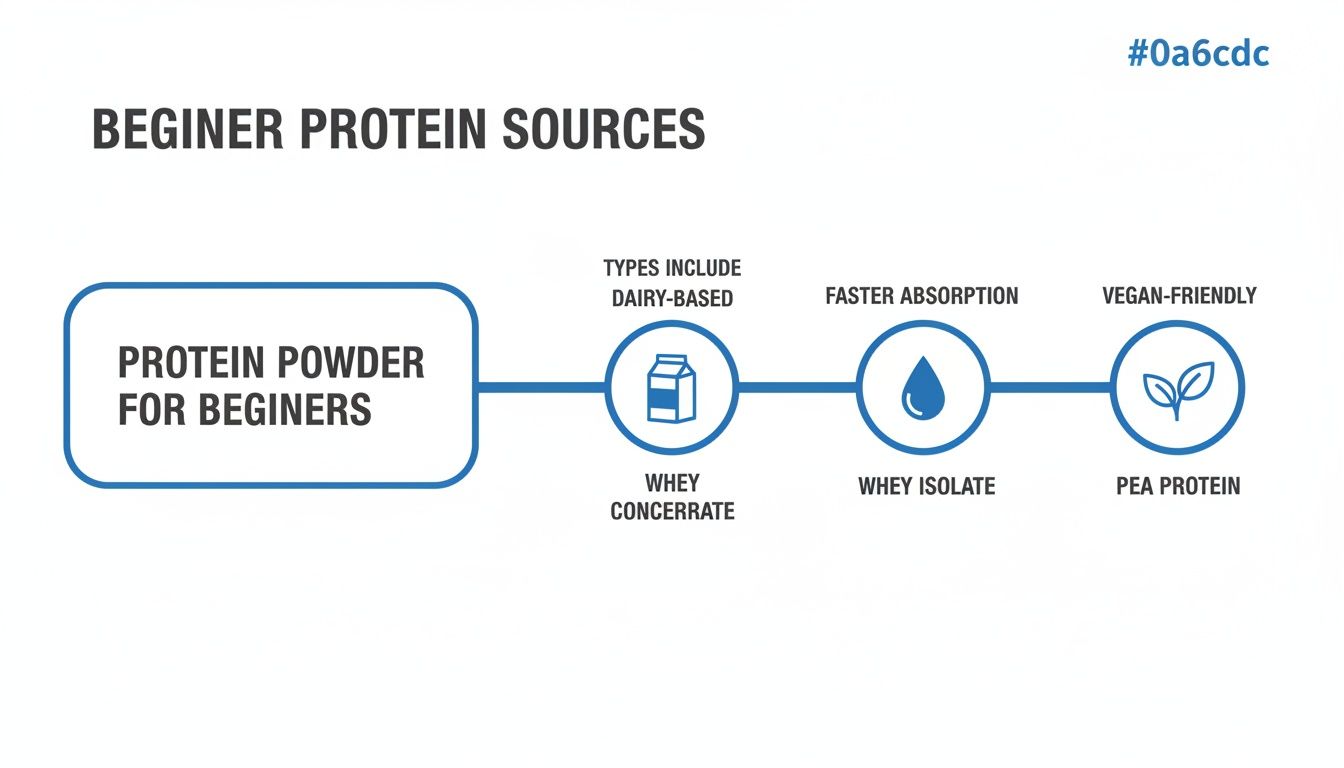
As you can see, each one has a distinct advantage, whether it’s the budget-friendly nature of Concentrate, the purity of Isolate, or the plant-based power of Pea Protein.
The Plant-Based Champions
Don’t do dairy? No problem. The world of plant-based protein has absolutely exploded, with both quality and flavour improving like crazy over the last few years. These options are fantastic not just for vegans, but for anyone looking for a hypoallergenic and easily digestible alternative.
Pea Protein
This is the current king of the plant-based world. Made from yellow split peas, it’s packed with essential amino acids (especially the muscle-building BCAAs) and is naturally hypoallergenic—free from dairy, soy, and gluten. The pea proteins on the market today mix incredibly well and come in some seriously delicious flavours.
Soy Protein
Soy protein is one of the few plant-based options that is considered "complete," meaning it contains all nine essential amino acids. It’s been a staple for vegetarians for ages and is still a solid, cost-effective choice with a smooth texture and pretty neutral taste.
Hemp Protein
Sourced from hemp seeds, this protein is a nutritional powerhouse. It might be slightly lower in total protein than pea or soy, but it makes up for it by being loaded with healthy omega-3 and omega-6 fatty acids and fibre. It often has a nuttier, earthier taste that works great in smoothies.
Whether you go for a dairy or plant-based option, you really can't go wrong. We pride ourselves on having a massive variety of both here at SupplementSource.ca, often with unbeatable clearance deals that make trying something new incredibly affordable. Plus, with our fast Canadian shipping, you’ll have your tub in no time.
How to Match Your Protein to Your Fitness Goals
Alright, you know the difference between whey, casein, and pea protein now. So let's get to the most important part: connecting that knowledge to your why. Your protein powder shouldn't just be something you gulp down; it should be a specific tool you use to hit your unique fitness targets.
Think of it like picking the right tires for your car. You wouldn't put summer performance tires on for a snowy drive through the Rockies, would you? The same logic applies here. The best protein powder for beginners is the one that lines up perfectly with what you’re trying to achieve.
Your Goal: Building Lean Muscle
This is the classic reason most people grab a protein shaker for the very first time. You’re hitting the weights, creating tiny micro-tears in your muscle fibres, and you need the right building blocks to repair them bigger and stronger.
For this goal, your number one priority is a high-quality protein source that’s rich in branched-chain amino acids (BCAAs). Leucine, in particular, is the key that starts the engine for muscle growth.
- Best Bet: Whey Protein Concentrate or Whey Isolate. Both are absolutely packed with BCAAs and digest quickly, making them perfect for that post-workout shake to kickstart recovery.
- Pro Tip: Don't get too hung up on the timing. While a post-workout shake is great, what truly matters is hitting your total daily protein goal. Aim for about 1.6-2.2 grams of protein per kilogram of body weight, spread throughout the day.
Your Goal: Weight Management or Fat Loss
If getting lean is your main objective, protein is your best friend. It's the most filling macronutrient, which is a game-changer when you're in a calorie deficit because it helps you feel fuller for longer. Remember, you’re not just trying to lose weight; you’re trying to lose fat while keeping the lean muscle you have.
This is where every calorie counts. You want the most protein possible for the fewest calories, carbs, and fats.
- Best Bet: Whey Protein Isolate. Its extra filtering process gets rid of most of the carbs and fats, giving you a pure, lean protein punch. A quality plant-based option like Pea Protein Isolate is another fantastic, low-calorie choice.
- Canadian Scenario: Picture this: you’re trying to stay lean through a long Canadian winter when cravings for comfort food are at an all-time high. A delicious, low-calorie isolate shake can satisfy that sweet tooth without derailing your progress.
Your Goal: General Health and Filling Nutritional Gaps
Maybe you're not aiming to be a bodybuilder or get shredded. Maybe you just want to make sure your body has what it needs to function at its best, especially on those busy days when a proper, balanced meal just isn't happening.
In this case, convenience and a solid nutritional profile are what you're after. You want a versatile protein you can easily toss into smoothies, oatmeal, or yogurt to boost your daily intake.
- Best Bet: A balanced Whey Concentrate, a Plant-Based Protein Blend, or even a Casein protein. A blend offers a mix of different absorption rates, while casein's slow-digesting nature makes for a seriously satisfying meal replacement that keeps you full for hours.
- Real-World Use: Think of it as your nutritional insurance policy. After a long day of hiking in a national park or just a hectic day at work, a quick shake ensures your protein needs are covered without any fuss.
The Dietary Factor: Always let your body have the final say. If dairy gives you trouble, even a low-lactose isolate might not be the best fit. A high-quality Pea Protein is hypoallergenic and gentle on the gut, making it an incredible choice for almost anyone, regardless of their primary goal.
At SupplementSource.ca, we get that everyone's goals are different. That’s why we stock a massive variety, from the leanest isolates for cutters to budget-friendly concentrates for builders, all at Canada’s lowest prices. Plus, our clearance section is the perfect place to experiment and find what works for you without a big commitment.
How to Shop Smart for Your First Protein Powder
Alright, you're ready to pull the trigger on your first tub of protein. That’s a huge step! But before you hit "add to cart," let's chat about how to get the most bang for your buck without compromising on quality. It's all about shopping smart, so you know you're making a great choice for both your body and your wallet.
The first skill you need to develop is becoming a label detective. Seriously. When you grab a tub, flip it over to the nutritional panel. There are a few key things to look for that will instantly separate the good stuff from the junk.
What to Look For on the Label
A high-quality protein powder should have a simple, straightforward ingredient list. The very first ingredient should be the protein itself—something like "Whey Protein Concentrate" or "Pea Protein Isolate." If you see a "proprietary blend" listed first or a long laundry list of fillers and sugars, that’s usually a red flag.
Here's a quick checklist you can use for any protein label:
- Protein Per Serving: Look for a powder that delivers at least 20-25 grams of protein per scoop. For most beginners, that’s the sweet spot for kicking off muscle recovery.
- Serving Size: Pay close attention here. Are the macros based on one scoop or two? Some brands can be a bit sneaky, listing great numbers but for a tiny serving size.
- Sugar Content: A little bit is fine for flavour, but you'll want to see less than 5 grams of sugar per serving. Any more than that, and you're starting to get into milkshake territory.
- Fillers: Keep an eye out for unnecessary additives like maltodextrin or various thickeners high up on the ingredient list. Remember, you're paying for protein, not fancy dust.
Here in Canada, always look for an NPN (Natural Product Number) on the label. This little eight-digit number is your assurance that Health Canada has reviewed the product for safety and quality. It gives you peace of mind that what's on the label is actually what's in the tub.
Your Guide to Smart Shopping at SupplementSource.ca
Once you know how to spot a quality product, it's time to find the best deal. We’ve built our entire business around making supplements affordable for every Canadian, and here’s how you can make the most of it.
First things first, don't sleep on our Clearance section. This is, hands down, Canada's largest collection of supplement deals. You'll find short-dated products from top-tier brands at a massive discount. For a beginner, this is the perfect way to try a high-end whey isolate without paying full price. The product is still 100% safe and effective; it just has a closer best-by date.
Because we've been in this game since 1995, we buy in massive volumes. That bulk purchasing power means we get unbeatable prices from suppliers, and we pass those savings directly on to you. It's why you'll consistently find the lowest prices in Canada right here on our site.
Finally, we keep shipping simple and fast. Any order over $99 CAD ships absolutely free, anywhere in Canada. It's a great excuse to stock up or maybe grab that tub of protein and some creatine to hit the free shipping threshold.
For anyone just starting out in Canada, the supplement market is absolutely booming, which is great news for you. It means high-quality powders are more affordable and easier to find than ever. The Canadian protein supplements market brought in USD 304.6 million in recent years and is projected to hit USD 487.6 million by 2030. This incredible growth ensures a huge selection of trustworthy, Health Canada-approved (NPN) powders—perfect for building a sustainable habit without breaking the bank. You can discover more insights on the Canadian protein market's growth if you want to dig deeper.
How to Use Protein Powder for the Best Results
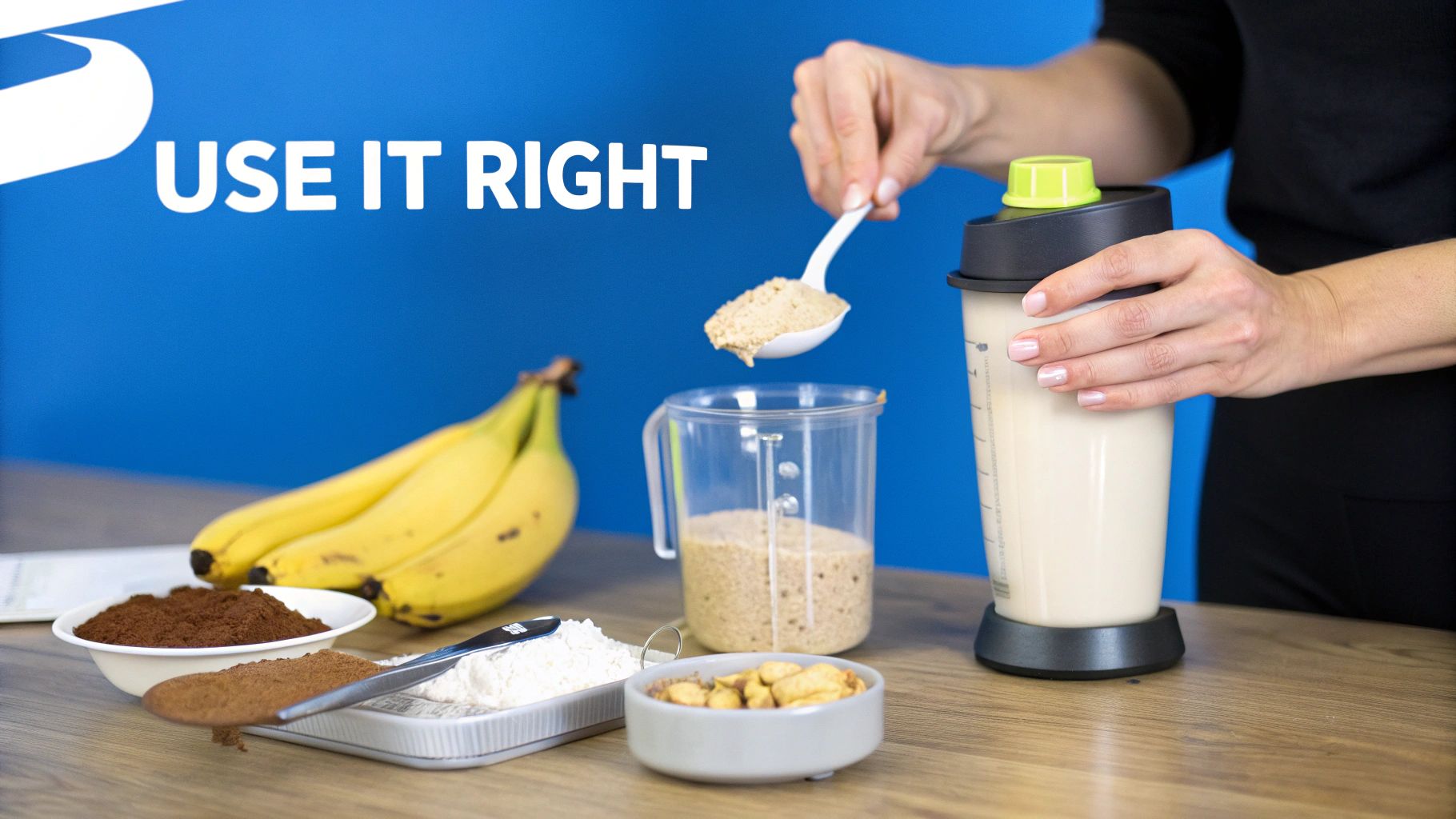
You’ve made your choice and the tub has landed on your doorstep, thanks to our fast Canadian shipping. Now what? Using your new protein powder correctly is the real key to unlocking the results you’re after.
Let's break down the simple, practical steps to make it a seamless and effective part of your routine. Getting the basics right—how much to use, when to take it, and how to make it taste great—will transform it from a chore into a tool you actually look forward to using.
How Much Protein Powder Should You Use?
Let's keep this super simple. The goal isn’t to chug as much protein as possible. It's about using it strategically to hit your daily nutrition goals.
For most beginners, one scoop is the perfect starting point. Depending on the brand, this usually gets you 20-30 grams of protein. That's an ideal amount to kickstart muscle repair after a workout or to easily boost the protein in a meal or snack.
A good rule of thumb is to aim for one serving (usually one scoop) per shake. If you're a larger individual or just smashed a particularly gruelling workout, bumping it up to 1.5 scoops is fine, but one is plenty for most situations.
Remember, protein powder is a supplement. It's meant to supplement your diet, not replace whole foods entirely.
When Is the Best Time to Drink Your Shake?
You’ve probably heard people at the gym talking about the "anabolic window"—a mythical 30-minute period after your workout where you must drink a protein shake or all your gains will disappear.
Here’s the truth: it’s mostly hype.
While having a shake within an hour or two post-workout is a great and convenient way to start the recovery process, modern science shows that your total daily protein intake is far more important than stressing over a specific timeframe. The key takeaway is consistency over perfect timing.
For a deeper dive, you can read our guide on the best times to drink protein shakes. The most important thing is simply hitting your daily protein target, day in and day out.
How to Make Your Protein Shakes Taste Great
Let's be honest—if your shake tastes like chalky water, you’re not going to stick with it. Making it delicious is non-negotiable for long-term success.
Here are a few game-changing tips to level up your shake game:
- Get the Liquid Ratio Right: Start with about 250-350 mL (8-12 oz) of cold water or milk per scoop. Too little liquid makes it pasty; too much makes it watery. Adjust until you find your perfect consistency.
- Add a Frozen Banana: This is the ultimate hack for a creamy, thick, milkshake-like texture. It also adds some healthy carbs to help replenish your energy stores.
- Bring in Healthy Fats: A spoonful of peanut butter, almond butter, or a handful of chia seeds not only adds amazing flavour but also makes the shake more satisfying and filling.
- Blend, Don’t Just Shake: While a shaker cup is great for on-the-go, using a blender at home will give you a much smoother, clump-free result every single time.
Don't be afraid to experiment! Protein powder is incredibly versatile. Try mixing it into your morning oatmeal, stirring it into Greek yogurt, or even using it in baking recipes. Finding ways to enjoy it will ensure it becomes a sustainable part of your new healthy lifestyle.
Common Beginner Mistakes and How to Avoid Them
Every single person you see in the gym who looks like they know what they’re doing was once a beginner. They’ve all made mistakes, gotten confused, and felt a little lost. The goal here is to help you skip a few of those common hurdles so you can build momentum and stay motivated.
Let's walk through some of the most frequent slip-ups people make with protein powder and give you a simple, real-world fix for each. Think of this as your friendly guide to sidestepping the learning curve.
Thinking Shakes Are Magic
It’s easy to get caught up in the excitement of starting something new. You get your first tub of protein, mix up a shake, and half-expect to see changes in the mirror overnight. When that doesn't happen, it can be a real motivation-killer.
- The Mistake: Believing protein powder is a magic bullet that builds muscle on its own, without putting in the work at the gym and in the kitchen.
- The Fix: You need to reframe your thinking. See your protein powder as a convenient tool that supports your hard work. Its job is simply to help you recover from your workouts and hit your daily protein goals more easily. The real magic happens when you consistently pair this tool with solid training and a good overall diet.
Relying Only on Supplements
This is the flip side of the previous mistake. Once beginners start seeing some results, it's common to think that if one scoop is good, three must be better. Before you know it, they're replacing actual meals with shakes, which means they're missing out on crucial vitamins, minerals, and fibre from whole foods.
- The Mistake: Prioritizing supplements over a balanced diet full of things like chicken, eggs, lentils, and vegetables.
- The Fix: Stick to the 80/20 rule. Aim to get at least 80% of your daily protein from whole-food sources. Use supplements to conveniently fill in that last 20%, especially around your workouts or on those busy days when a proper meal just isn't happening. This way, you get the best of both worlds.
Believing More Protein Always Equals More Muscle
There's a stubborn myth in gym culture that you need to slam massive amounts of protein to grow. While protein is absolutely essential for muscle repair, your body can only use so much for building muscle at one time.
- The Mistake: Chugging a massive 70g protein shake thinking it will force your muscles to grow faster.
- The Fix: Focus on your total daily intake, but spread it out over several meals and snacks. Aiming for 20-40g of protein per meal or shake is the sweet spot. This gives your muscles a steady supply of amino acids throughout the day without just wasting expensive powder. When it comes to protein, consistency beats cramming every single time.
Your Beginner Protein Questions Answered
Alright, let's jump into some of the most common questions we hear from people who are new to the protein game. Think of this as a quick chat with a buddy at the gym who knows their stuff—no complicated jargon, just straight-up answers to get you started on the right foot.
Do I Really Need Protein Powder to Build Muscle?
Honestly? No, you don't need it. But man, does it ever make things easier.
Think of protein powder as an incredibly efficient shortcut. It’s a tool to help you hit your daily protein goals, which are crucial for repairing and building muscle. On those super busy days when you can't cook a chicken breast, or right after a killer workout, a shake is the most convenient way to give your body the building blocks it needs. It's meant to complement a solid diet of whole foods, not replace it.
Will Protein Powder Make Me Bulky?
This is probably the biggest myth out there, especially for women. The short and sweet answer is a hard no.
Protein powder itself is just a concentrated food source. It helps your muscles recover and repair. Getting "bulky" is the result of very specific, intense weight training combined with consistently eating more calories than your body burns. A daily protein shake isn't going to turn you into a bodybuilder overnight. What it will do is help you feel fuller, recover faster, and build lean, toned muscle.
When Is the Absolute Best Time to Take My Protein Shake?
People used to be obsessed with the "anabolic window," believing you had to chug a shake within 30 minutes of your last rep or you'd lose all your gains.
While that idea was popular, newer research has shown us something far more important: your total daily protein intake is what really matters. That being said, having a shake within an hour or two after your workout is still a fantastic and convenient time to kickstart that recovery process. The bottom line? Don’t stress about the clock. Just focus on being consistent day in and day out.
How Do I Know if a Protein Powder Is Good Quality?
This is a great question. In Canada, the first thing you should look for is an NPN (Natural Product Number) on the label. This little number means Health Canada has reviewed and approved the product for safety, quality, and efficacy. It's your baseline for trust.
Beyond the NPN, just flip the tub around and read the ingredients. A quality powder will have a protein source—like whey isolate or pea protein—listed as the very first ingredient. You want to see minimal fillers, artificial sweeteners, or crazy amounts of added sugar. Here at SupplementSource.ca, we make it simple by only stocking reputable, NPN-approved brands that we stand behind.
Beyond these common protein questions, it's natural to wonder how supplements fit into your overall health picture. For anyone with concerns about cardiovascular well-being, taking a look at some general supplement guidelines for heart health can offer some valuable context.
Ultimately, starting your fitness journey is an exciting step. Armed with this knowledge, you're ready to make smart choices, avoid common mistakes, and use protein powder as the powerful tool it is. You've got this!
Ready to find the perfect protein to kickstart your journey? Explore Canada's largest selection and lowest prices at SupplementSource.ca. With unbeatable clearance deals and fast, free shipping on orders over $99, we make it easy to get started right. Find your first protein powder today!