

Your Guide to Finding the Best Lactose-Free Protein Powder in Canada
That post-workout shake is supposed to help you recover, not leave you feeling bloated and uncomfortable for hours. If that sounds a little too familiar, you're definitely not alone. The fix is often as simple as switching to a protein powder lactose-free, which gives you all the muscle-building benefits without the digestive drama.
Tired of Bloat? Finding Your Perfect Protein Match

You just crushed a tough workout. You're tired, you're sore, and you know a protein shake is exactly what your muscles need to start repairing and growing. But then comes the dread—the bloating, the gas, and that all-around awful feeling that follows your shake.
It’s a frustrating cycle for so many Canadian gym-goers. You’re doing everything right to support your fitness goals, but your supplement choices feel like they're working against you. The good news? It’s probably not you, and you don’t have to give up on protein powder.
Think of this guide as your roadmap to the world of stomach-friendly, lactose-free protein. We'll break down exactly why your current tub might be causing problems and introduce you to fantastic alternatives that deliver results without the side effects. We're here to help you find a powder that works with your body, not against it.
Here’s a sneak peek at what we'll cover:
- The real reason your standard protein might be causing digestive issues.
- A clear comparison of top lactose-free options, from whey isolate to plant-based proteins.
- How to read labels like a pro to avoid hidden lactose and make smarter choices.
- Budget-friendly tips for buying supplements in Canada, so you can save money while feeling great.
Your protein shake should be a reward, not a punishment. Once you understand your options, you can finally put an end to post-workout bloat and focus on what really matters—getting stronger, recovering faster, and smashing your goals.
Understanding Why Regular Protein Causes Discomfort
Ever slammed a protein shake and felt it sit like a rock in your stomach? You’re not alone. The usual suspect behind that bloating and discomfort is lactose, the natural sugar found in milk and, by extension, most standard whey protein powders.
Here’s a simple way to think about it: your digestive system needs a special enzyme called lactase to break down and absorb lactose. If your body doesn't produce enough of this enzyme—a very common condition known as lactose intolerance—that sugar just sits there, undigested. The result? That all-too-familiar bloating, gas, and general gut unease that so many of us quietly put up with after a workout.
This isn't a flaw or something you're doing wrong; it's just biology. In fact, lactose intolerance is so widespread that it's a huge reason the market for lactose-free products keeps growing right here in Canada. It affects a massive chunk of the adult population, so if this sounds like you, you're in good company.
The Science Behind the Symptoms
So what’s actually happening in your gut? When that undigested lactose travels through your system, it starts to ferment and draw water into your intestines. It’s a straightforward chain reaction: no lactase means no digestion, which leads to fermentation by gut bacteria, and that’s what triggers all those uncomfortable symptoms.
This is exactly why making the switch to a lactose-free protein powder can feel like a total game-changer. For a lot of people, the difference in how they feel after swapping a standard whey concentrate for a more filtered whey isolate is like night and day. We dive deep into those differences in our complete guide on whey protein vs whey isolate.
The key takeaway is that your body isn't "broken." It's just sending you a clear signal that it needs a different type of fuel to perform its best without digestive distractions.
Beyond Just Lactose
For some folks, digestive peace goes a step further than just cutting out lactose. Other things in your diet can contribute to that bloated feeling. If you've already tried lactose-free options and are still feeling off, it might be worth exploring other strategies. Getting familiar with understanding low FODMAP dietary approaches can offer more clues to help you pinpoint what's causing the trouble.
At the end of the day, listening to your body is the most important part of the process. The goal is to find supplements that actually support your goals, not hold you back.
Comparing Your Lactose-Free Protein Options
So, you’ve decided to ditch the bloat and find a protein powder that actually agrees with you. Smart move. The good news is, the world of lactose-free protein is packed with fantastic choices. It’s not just about dodging dairy anymore; it’s about finding the perfect fuel for your specific goals, lifestyle, and even your taste buds.
Let's walk through the supplement aisle together and break down the heavy hitters.
If you're still on the fence about whether lactose is the real culprit behind your discomfort, this little flowchart can help clear things up.
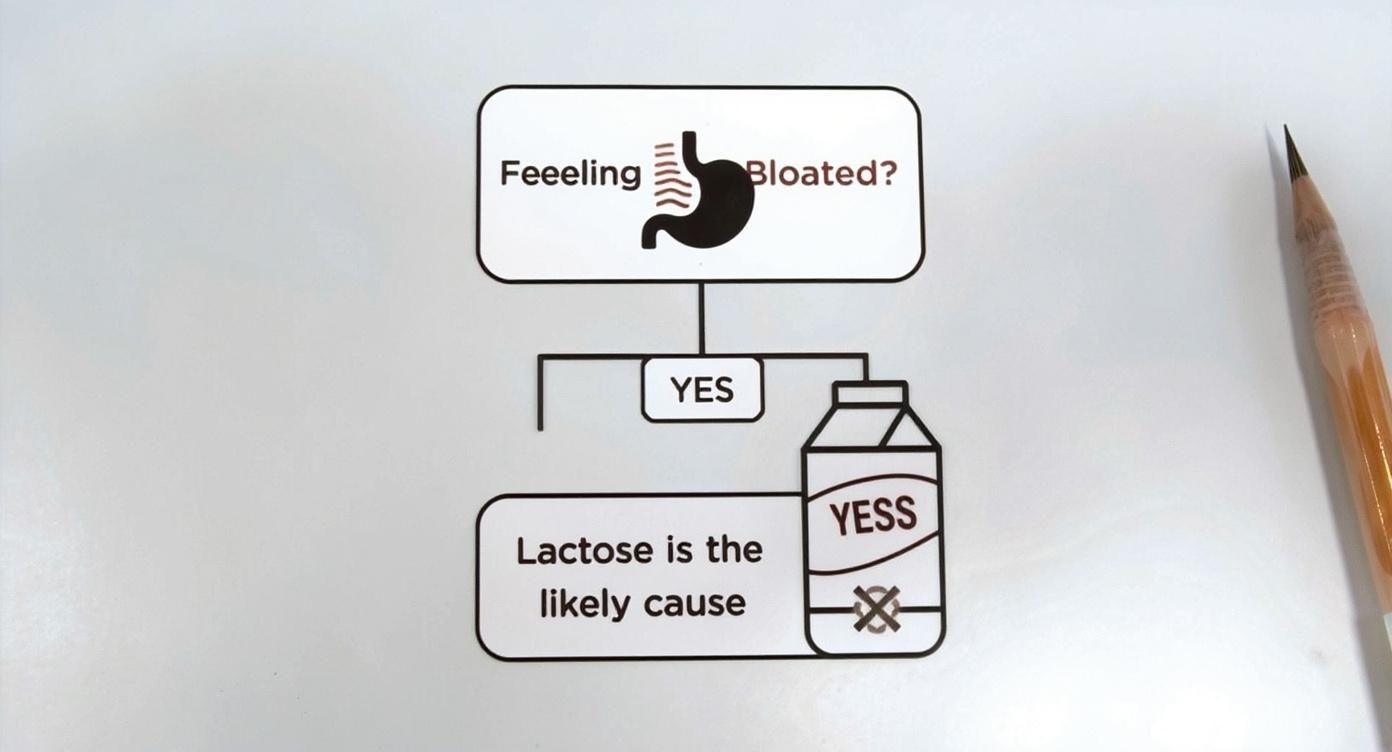
For most people dealing with digestive issues from supplements, lactose is the most common starting point for troubleshooting.
Whey Protein Isolate: The Refined Powerhouse
Think of whey protein isolate as the premium, ultra-filtered version of standard whey. It goes through a meticulous filtering process where nearly all the lactose, fat, and carbs are stripped away. What you’re left with is an incredibly pure protein—often over 90% protein by weight.
- Pros: It absorbs exceptionally fast, making it the perfect choice to kickstart muscle repair right after a gruelling workout. It also has a complete amino acid profile, is typically very lean on calories, and mixes smoothly with a clean taste.
- Cons: That extra processing means it’s usually a bit pricier than regular whey concentrate. And while it's extremely low in lactose, those who are severely intolerant might still notice some minor issues.
- Best For: Athletes cutting calories who need maximum protein with minimal carbs and fat, or anyone who wants a fast-digesting post-workout shake without the bloat.
Beef and Egg Protein: The Animal-Based Alternatives
If you want to step away from dairy entirely, you'll find some powerful options derived from other animal sources. These are naturally 100% lactose-free from the get-go and offer robust amino acid profiles that are fantastic for muscle growth.
Beef protein isolate is made by hydrolyzing beef, which results in a fast-digesting protein that’s also rich in creatine precursors. Egg white protein is another excellent choice, known for its moderate digestion speed that gives you a more sustained release of amino acids to your muscles.
These are fantastic choices if you want to stick with an animal-based protein but need a guaranteed zero-lactose solution. They are especially popular among athletes following paleo-style diets.
Plant-Based Proteins: The Vegan Vanguard
The plant-based protein scene in Canada has absolutely exploded, and for good reason. Gone are the days of gritty, single-source powders that tasted like dirt. Today’s vegan proteins are sophisticated blends of sources like pea, brown rice, hemp, and soy.
- Why Blend? Simple. Combining different plant sources creates a complete amino acid profile, ensuring your muscles get all the essential building blocks they need—just like whey does.
- Benefits: Plant proteins are naturally lactose-free, often easier for many people to digest, and can be packed with extra fibre and micronutrients. They’re a sustainable and effective choice for everyone, not just vegans.
To help you navigate all these options, here's a quick comparison table breaking down the key players.
Lactose-Free Protein Powder Comparison
| Protein Source | Lactose Content | Amino Acid Profile | Digestion Speed | Common Use Case |
|---|---|---|---|---|
| Whey Protein Isolate | Very low (nearly zero) | Complete | Very Fast | Post-workout recovery |
| Beef Protein Isolate | Zero | Complete | Fast | Paleo diets, dairy-free muscle building |
| Egg White Protein | Zero | Complete | Moderate | Sustained protein release, baking |
| Plant-Based Blends | Zero | Complete (when blended) | Varies (Moderate) | Vegan diets, digestive sensitivity |
This table should give you a solid starting point for figuring out which protein source aligns best with your needs, from post-workout shakes to all-day fuel.
If you're new to the non-dairy world, getting a handle on the basics is key. Exploring a beginner's guide to vegan protein can give you a great foundation. Here at SupplementSource.ca, we stock a massive variety of top Canadian and international brands in every category, making it easy to find an option that fits your needs and your budget.
How to Read Supplement Labels Like an Expert

Don't let the flashy marketing plastered on the front of a protein tub fool you. Becoming a savvy supplement shopper means getting into the habit of flipping that container over to examine the Nutrition Facts panel and ingredient list. That's where the real story is told.
The front might scream "High Protein!" or "Lean Muscle!", but the back tells you exactly what you're putting into your body. This one skill is your best defence against digestive trouble, and it makes sure you’re getting what you paid for: a truly lactose-free protein that works.
Identifying Hidden Lactose Sources
Your first mission is to scan that ingredient list for any red flags. Some are pretty obvious, but others can be surprisingly sneaky.
- Whey Protein Concentrate (WPC): This is the number one offender. Unless the label specifically says it's been treated to be lactose-free, standard WPC contains a significant amount of lactose. If you see this high up on the ingredient list, it's an immediate no-go.
- Milk Solids or Skim Milk Powder: You'll often find these added as fillers or to improve the flavour and texture. The problem is, they're direct sources of lactose.
- "Lactose-Free" vs. "Low Lactose": Pay very close attention to this wording. A "lactose-free" claim, especially on a whey isolate, is exactly what you're looking for. A "low lactose" product might still contain enough to cause discomfort if you're particularly sensitive.
The rule of thumb is simple: If you’re trying to avoid that bloated feeling, whey protein isolate, beef protein, egg protein, or plant-based proteins should be right at the top of the ingredient list. Everything else is secondary.
What to Look For Beyond the Protein
A good label gives you more than just the protein source. It’s full of clues about the product's overall quality and the company's honesty.
Thankfully, there's a growing trend toward greater transparency from manufacturers. This push for clearer labelling is a big win for us here in Canada, making it much easier to spot potential allergens and verify a product's claims, a topic explored in various industry-wide studies.
When you're scanning labels on SupplementSource.ca or in a store, keep an eye out for these good signs:
- Minimal Ingredients: Honestly, a shorter ingredient list is often a better one. It means there's less room for unnecessary fillers, artificial sweeteners, or gums that can sometimes cause their own digestive headaches.
- Third-Party Testing Seals: Look for logos from organizations like NSF or Informed-Sport. These certifications mean an independent lab has tested the product to confirm it’s free of banned substances and that what's on the label is actually what's in the tub.
- Clear Serving Size and Scoop Weight: Reputable brands make it simple to see exactly how much protein you're getting per scoop. This kind of transparency helps you accurately track your macros and hit your daily protein targets without any guesswork.
You've done the homework and snagged the perfect lactose-free protein powder. Awesome. Now for the best part: actually using it to build muscle, recover faster, and smash your goals. But getting the most out of your protein is about more than just mindlessly chugging a shake after your last set.
Let’s get into the nitty-gritty of timing and dosage, and then we’ll get creative. Following these simple strategies will make your protein routine more effective and, just as importantly, more enjoyable. That's the real secret to sticking with it for the long haul.
When and How Much to Take
First things first, let's talk numbers. Figuring out the right amount of protein is the most important piece of the puzzle. For most active people, a solid target is somewhere between 1.6 to 2.2 grams of protein per kilogram of body weight each day. Your total daily intake matters far more than any single shake.
Once you’ve got your daily target, you can map out your intake. You’ve probably heard about the "anabolic window"—that magical 30-minute period post-workout. While the science shows that window is a lot wider than we once thought, having a shake within an hour or two after training is still a fantastic way to kickstart the muscle repair process.
Pro Tip: Your post-workout shake is all about convenience. It’s an easy, fast way to get high-quality protein into your system when your muscles are primed for it. One scoop, which usually nets you 20–30 grams of protein, is typically all you need to get the job done.
Beyond the Shaker Bottle
Look, a protein shake gets the job done, but it’s not your only move. In fact, weaving your powder into actual meals can make your routine way more sustainable. Let's be real, on a cold Canadian morning, a warm breakfast just hits different than an icy shake.
Here are a few dead-simple (and delicious) ways to use your protein powder lactose-free:
- Power-Up Your Porridge: Before you even turn on the stove, stir a scoop of vanilla or chocolate protein powder into your oatmeal. It makes it extra creamy and adds a serious protein punch to get your day started right.
- Blend a Better Smoothie: Don't just settle for powder and water. Toss your protein in a blender with frozen berries, a banana, a handful of spinach, and some almond milk. Boom—you've got a nutrient-packed meal or a killer snack.
- Simple Protein Pancakes: Just mix a scoop of your favourite flavour right into your pancake batter. It’s such an easy hack to turn a classic weekend breakfast into a muscle-building machine.
Making protein a seamless part of your everyday meals is the key to consistently hitting your numbers. And a little insider tip: at SupplementSource.ca, we often have amazing deals on the bigger tubs, which makes it way more affordable to get creative in the kitchen without stressing about running out.
Your Smart Canadian Supplement Shopping Guide
Let's be real: high-quality lactose-free protein powder shouldn't cost you an arm and a leg. As a Canadian company, we’re obsessed with helping our fellow Canadians get the absolute best value without any of the cross-border nightmares like surprise duties or shipping that takes forever.
Sticking to a budget is way easier than you might think. One of the simplest tricks of the trade is to buy in bulk. Grabbing a larger 5lb or 10lb tub almost always crushes the cost-per-serving compared to those smaller containers. It’s a tiny change in habit that adds up to massive savings over time.
Score Deals Like a Pro
Here’s another insider tip: keep a close eye on our clearance section. We're known for having Canada’s biggest selection of clearance deals, and it's where you can find top-tier brands at absolute rock-bottom prices. These are often short-dated products that are perfectly safe and just as effective—they’re just offered at a killer discount.
You’re getting the exact same high-quality protein for a fraction of the price. This is, without a doubt, the smartest way to try new brands or stock up on your old favourites without blowing your budget.
Find Your Flavour and Formula
Whether you’re a die-hard whey isolate fan or you're ready to explore the best plant-based protein powders, we’ve got your back. Having a huge variety means you can dial in the perfect product that fits both your digestive needs and your wallet.
At SupplementSource.ca, we keep it simple. We offer fast, reliable shipping right across Canada, so you get what you need, when you need it. Between our everyday low prices, massive clearance deals, and the sheer convenience of shopping Canadian, you can stay locked in on your fitness goals while keeping your bank account happy.
Common Lactose-Free Protein Questions Answered
Even with all the facts laid out, it’s totally normal to have a few last-minute questions before you pull the trigger on a new tub of protein. Let's run through some of the most common ones we hear from our fellow Canadian lifters so you can feel 100% confident in your choice.
Think of this as your final check-in, clearing up any nagging doubts.
Is Whey Isolate Really 100% Lactose-Free?
This is a great, and very specific, question. While the high-tech filtration process strips out well over 99% of the lactose, it's nearly impossible to guarantee a true 100% zero. For the vast majority of people with lactose intolerance, whey isolate is so incredibly pure that it causes no digestive problems at all.
However, if you're someone who is extremely sensitive or has a diagnosed dairy allergy (not just an intolerance), your safest bet is to go with a protein source that is naturally lactose-free from the get-go.
The Takeaway: For most, whey isolate is a fantastic, bloat-free option. For the highly sensitive, sticking to beef, egg, or plant-based proteins is the most reliable choice for total peace of mind.
Will I Build the Same Muscle with Plant Protein?
Absolutely, yes. This is a classic myth that honestly needs to be put to rest! Modern plant-based protein powders have come a long way from the chalky, single-source powders of the past. Top-tier brands now use a smart blend of different plant sources, like pea and brown rice protein, to create a complete amino acid profile.
This means your muscles get all the essential building blocks they need to repair, recover, and grow—exactly as they would with whey. As long as your total daily protein intake is on point for your goals, you can expect the same great results.
Do Lactose-Free Proteins Taste Bad?
They definitely used to have a bit of a reputation, but flavouring technology has improved like you wouldn't believe! Whey isolates, in particular, are known for their clean, smooth taste that’s almost indistinguishable from traditional whey.
Plant proteins can sometimes have a slightly "earthier" flavour profile, but the best brands have truly mastered their formulas. A pro tip is to read customer reviews on sites like SupplementSource.ca—it’s an excellent way to find a flavour that people are genuinely excited to drink every day.
Ready to finally find a protein powder that works with your body, not against it? Explore Canada's widest selection of lactose-free options at SupplementSource.ca, all at the guaranteed lowest prices.