

Best Time to Take Vitamins for Better Absorption
The best time to take vitamins is usually the one you can repeat without thinking, ideally with a meal you actually eat most days. Food gives many nutrients a better shot at being absorbed, and a routine that sticks will do more for you than a perfect plan abandoned by next week.
The Quick Answer on the Best Time to Take Vitamins

Picture your counter before an early 6 a.m. leg day.
The bottles are lined up beside your toothbrush, every label wants a different routine, and you're standing there wondering which one goes first.
If that sounds familiar, you don't need a colour-coded spreadsheet to get this right.
Why Consistency Matters More Than the Clock
Think of vitamins like training sessions you put on the calendar each week.
The session you repeat matters far more than one flawless workout you never do again. Your body treats daily nutrients the same way.
Taking a vitamin with breakfast five mornings out of seven helps far more than nailing the timing twice, then forgetting the bottle exists.
A simple starting point that works for beginners and seasoned lifters:
- Take most vitamins with food, especially a meal with a little healthy fat.
- Pick one anchor meal you rarely skip, like breakfast before leaving home.
- Split the exceptions apart, because calcium and iron compete when swallowed together.
- Repeat the same window daily, so remembering becomes automatic.
Food matters because digestion gives nutrients time to dissolve, mix with dietary fat, and move through your gut gradually.
For practical background on how timing and digestion affect effectiveness, see this article on supporting gut health and absorption.
Consistency beats perfection. A good routine followed most days will serve you better than flawless timing abandoned by Friday.
What This Guide Covers Next
Next comes the one distinction that explains most timing advice.
Fat-soluble vitamins need dietary fat for the ride, while water-soluble vitamins dissolve readily and need regular replenishing.
From there, we'll get into individual vitamins, minerals that shouldn't share the same bite, and simple schedules for athletes, adults over 40, and shift workers whose breakfast might happen at sunset.
Quick Reference Vitamin Timing Cheat Sheet
Screenshot this table or stick it on the fridge while the habit clicks. It's a quick answer, not a rulebook that makes mornings harder.
| Vitamin or Supplement | Best Time of Day | Take With | Key Tip |
|---|---|---|---|
| Multivitamin | Morning | Breakfast | Anchor it daily |
| Vitamin D | Morning | Fatty food | Pair with breakfast |
| B-complex | Morning | Food | Many find it energizing |
| Vitamin C | Anytime | Food or water | Smaller doses feel gentler |
| Calcium | Split meals | Food | Keep 500 mg portions |
| Magnesium | Evening | Dinner or snack | Popular bedtime routine choice |
Use it as a starting point, then adjust around your own meals and stomach comfort. If a time keeps getting missed, move it to the meal you already trust.
Fat-Soluble vs. Water-Soluble: Why Timing Works

Think of the split like getting around in a cold Canadian winter. Some vitamins wait for a lift, while others dissolve fast and move along on their own.
Once that clicks, the best time to take vitamins feels a lot less random.
Meet the Vitamins That Need a Ride
Fat-soluble vitamins are A, D, E, and K. They need fat from food to absorb properly, so taking them with a meal matters more than taking them at a magical hour.
Your body can tuck these away in tissue for later use. That means consistency helps — you don't need to chase a bigger dose.
Easy pairings already sitting in most Canadian kitchens:
- Eggs at breakfast, scrambled, poached, or folded into a sandwich
- Yogurt or cheese with lunch, adding flavour plus a bit of fat
- Avocado toast or salmon at dinner, since both bring their own fats
Vitamin D is the big one for many Canadians. From Halifax to Winnipeg, winter daylight can feel limited for months.
Taking it with a fatty breakfast fits real life: coffee, toast, eggs, and out the door. If you're cutting calories but still want steady protein, pairing that breakfast with a whey isolate shake is an easy way to keep protein high without extra carbs.
Meet the Vitamins That Move Through Quickly
Water-soluble vitamins include vitamin C and the B family, such as B12, B6, and folate. They dissolve in water, circulate, and extra amounts generally exit through urine.
So the game here is rhythm, not storage. A steady routine beats the occasional huge serving.
A simple way to handle them:
- Take B vitamins in the morning if they give you a brighter, more awake feel.
- Take vitamin C whenever it fits, ideally with food if your stomach prefers that.
- Keep the habit steady, because regular intake matters more than perfect timing.
Most multivitamins mix both types, which is why they usually sit best with an actual meal rather than a rushed swallow on an empty stomach.
Fat-soluble vitamins ride with fat. Water-soluble vitamins reward routine. Remember that, and most timing questions get much easier.
The best time to take vitamins has less to do with the clock and more to do with what's in the capsule and what you eat with it.
Best Times for Common Vitamins and Multivitamins
Morning often wins for convenience, not biology. Breakfast is just the easiest reminder for most people.
But if your lunch or dinner is far more consistent, that works just as well. Regularity beats perfect timing every time.
Choose a meal you rarely miss, then adjust for food pairing and stomach comfort.
Fit B Vitamins and Vitamin C Around Your Day
B-complex sits nicely with breakfast. Some folks say they feel a little more peppy after it, though it isn't a stimulant and morning isn't mandatory.
Here's the thing. If you have a proper breakfast before heading to a Toronto gym, use it as your anchor. If breakfast is just coffee on the run, your favourite lunch will feel much better.
- Vitamin C is flexible, so tie it to whatever meal you actually eat.
- Smaller divided servings can be easier on the gut than one big dose.
- Follow the product directions instead of adding extra doses to fill the day.
The supplement timing overview has a helpful breakdown of these looser windows and food pairings.
Pair Vitamins D, E, and K with Food
Vitamin D does best with a breakfast or lunch that has some fat in it. Think eggs on toast or a sandwich with avocado, not a specific minute on the clock.
Vitamins E and K work the same way. As the food-pairing guidance explains, the fat on your plate matters a lot more than morning versus afternoon.
Vitamin-by-Vitamin Timing and Food Pairing Guide
| Vitamin | Solubility | Ideal Timing | Best Food Pairing |
|---|---|---|---|
| B-complex | Water-soluble | Convenient breakfast | Food for comfort |
| Vitamin C | Water-soluble | Any convenient time | Meal if preferred |
| Vitamin D | Fat-soluble | Breakfast or lunch | Eggs or avocado |
| Vitamin E | Fat-soluble | Any regular meal | Nuts or olive oil |
| Vitamin K | Fat-soluble | Any regular meal | Food containing fat |
| Multivitamin | Mixed | Most consistent meal | Meal containing fat |
Stick that rhythm on your fridge for a week and you won't have to think about it again. For help comparing formats, explore our guide to vitamin D supplements in Canada.
Make Multivitamins Comfortable and Consistent
Multivitamins mix both types, so your most reliable meal is the sensible default. Iron-containing formulas can be tougher on an empty stomach, and having food first usually helps comfort.
- Choose your most reliable meal.
- Follow your formula's serving instructions.
- Move the timing if another meal suits you better.
Readers comparing skincare-marketed formulas can also explore skin wellness support in Bel Air.
Canadian store SupplementSource.ca carries a huge variety of multivitamins and single-ingredient options from well-known brands at Canada's lowest prices. Pick the format that fits, then practise your meal-based routine this week.
Space Out Calcium, Iron, and Other Minerals

Picture a typical weekday morning. Keys in one hand, coffee in the other, gym bag over your shoulder. You toss back calcium, iron, and your multivitamin all at once and call it done. Then mid-morning hits and your stomach is not happy.
Minerals cause most of the confusion. Several fight for the same entry point. Think of a packed arena doorway in January, everyone trying to push through at the same time.
Split Calcium Into Smaller Doses
Calcium absorbs better in modest servings rather than one large morning dose. Alberta Health Services points out that calcium is best absorbed when no more than 500 milligrams of elemental calcium is taken at one time, so 1,000 milligrams from supplements works better as two 500-milligram doses spread apart. The daily target sits at 1,000 milligrams for adults aged 19 to 50 and 1,200 milligrams for adults over 50, with food and supplements counting toward that total. You can read the calcium and vitamin D guidance on albertahealthservices.ca for the full breakdown.
How to do it without overthinking:
- Breakfast dose, one serving alongside eggs, yogurt, or toast
- Later dose, a second serving at lunch or dinner, never doubled up
- Food counts first, since milk, cheese, and fortified options all add to your total
If you're training hard and eating on the go, a calcium-rich lunch plus a split supplement serving is plenty to keep bones supported.
Give Iron Its Own Time Slot
Iron performs best on its own, kept away from calcium and any multivitamin that contains it. Coffee and tea need some distance too, since compounds in both can cut into how much iron your body takes in.
Calcium wants smaller servings. Iron wants breathing room. Separate those two and the rest mostly sorts itself out.
When iron sits badly on an empty stomach, a small snack can take the edge off. Stick to your product directions and keep that snack light on calcium where you can.
Place Magnesium and Zinc Where They Fit
Magnesium has become a go-to evening pick for people building a calmer wind-down after training. A popular option is magnesium glycinate or citrate with dinner or an evening snack, which fits easily into a post-gym routine. Zinc tends to go down easier with food, because an empty stomach can bring on nausea for some people.
- Take magnesium with dinner or an evening snack you already eat.
- Take zinc at lunch, kept clear of your iron window.
- Keep your multivitamin anchored to whatever meal you never skip.
Forms and flavours differ quite a bit, so have a look at our guide on magnesium forms, benefits, and dosage before you settle on one.
Give this spaced-out approach a try this week, and check SupplementSource.ca for Canadian mineral options with fast, reliable shipping across Canada.
Timing Strategies for Athletes, Older Adults, and Shift Workers
Your training schedule, your age, even the hours you work all shape which meal ends up being the most practical reminder. The best time to take vitamins is whatever slot already exists, not a new appointment you have to create.
Use Post-Workout Meals as Reminders
Athletes don't need to sync everyday vitamins to the final rep. A post-training meal works perfectly as the reminder, whether that's breakfast after an early swim or dinner once hockey practice wraps up.
Through heavy training blocks, the basics deserve most attention. Calcium supports bones and muscle function, and vitamin D helps your body absorb calcium, according to Alberta Health Services' nutrition guidance.
- After morning training, take your usual vitamin D with eggs and toast instead of squeezing it into the gym session.
- During Canadian winters, hold onto that meal-based habit when outdoor sessions move inside.
- On rest days, lean on another reliable meal rather than letting the habit slide.
Treat your meal as the reminder, not your workout as the deadline.
For lifters structuring a beginner week, anchoring creatine monohydrate to that same post-workout meal is a simple, actionable habit — 3-5 g daily with food and water, no loading phase required.
Spread Mineral Intake Across Meals After 40
Once you're 40 and over, the smarter move is organising what you already take around meals, not adding more products to the shelf.
Look at what your meals already deliver first. Yogurt at breakfast, fortified beverages at lunch, and calcium-rich foods at dinner all count toward your total.
| Routine | Practical Adjustment |
|---|---|
| Calcium comes mostly from food | Keep those foods distributed across meals |
| Supplemental calcium is needed | Divide larger amounts between separate meals |
| Vitamin D gets forgotten | Pair it with your most dependable meal |
Splitting supplemental calcium comes down to absorption. Alberta Health Services recommends smaller calcium servings of 500 milligrams or less at once.
Anchor Shift-Work Supplements to Your Main Meal
For shift workers, "morning" might mean waking up at four in the afternoon. Chasing a breakfast-time alarm makes no sense, so anchor everything to the main meal you eat after waking.
- Choose your anchor meal, even when its clock time shifts around.
- Keep any separate mineral serving attached to another meal.
- Record each serving, so rotating shifts never leave you guessing.
Canadian store SupplementSource.ca carries everyday essentials alongside vitamins and minerals in Canadian pricing, with clearance deals and overstock savings if you like to stock up. Pick only what fits your needs, then run your meal-based reminder through the next training week or shift rotation.
A Sample Day of Vitamin Timing You Can Start This Week
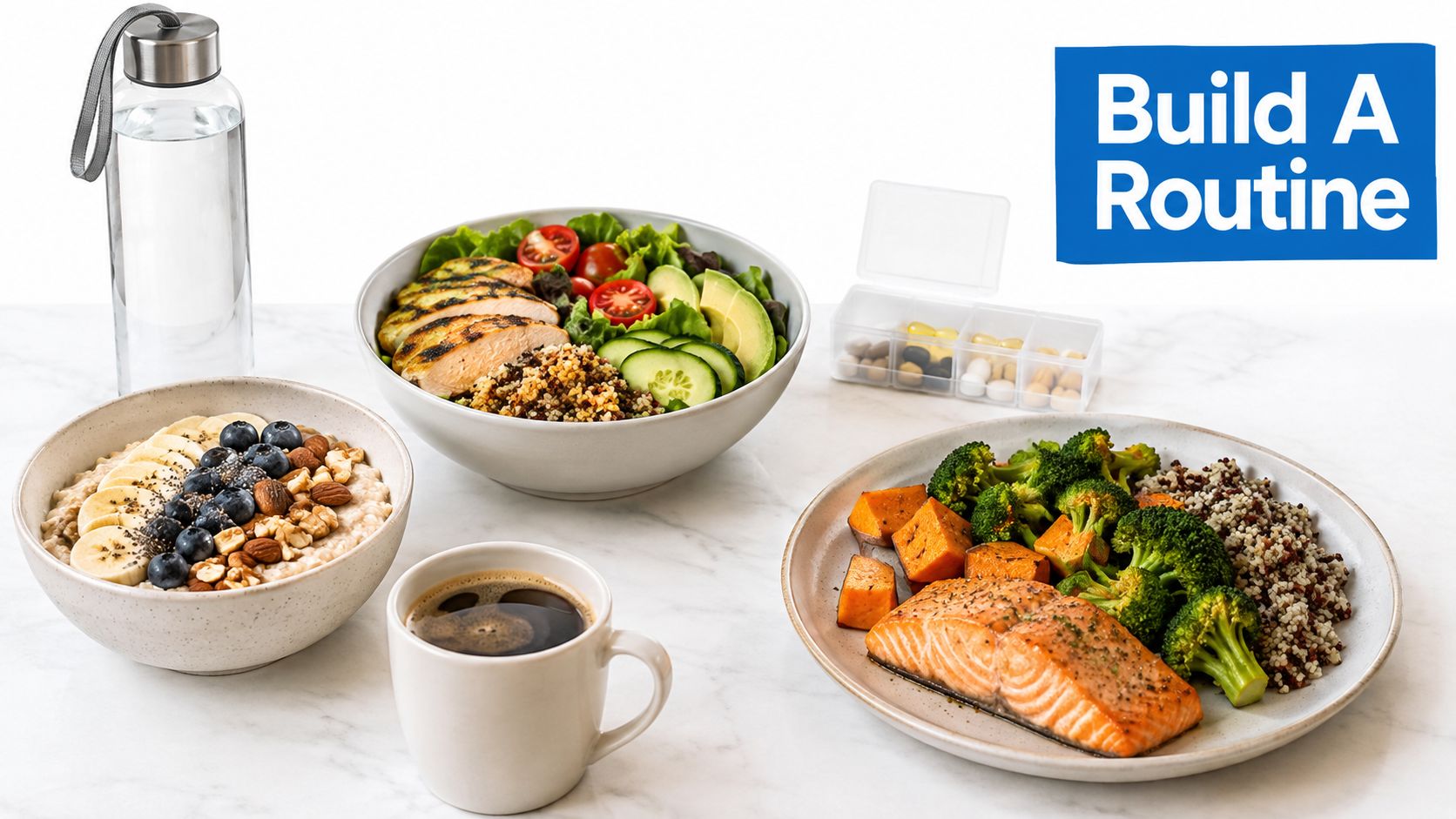
Enough theory. Here's how all that timing advice looks on an ordinary day you can start this week.
The best time to take vitamins comes down to a meal you'll never miss, not some ideal hour on the clock.
Follow This Simple Canadian Meal Timeline
Think of this as a plug-and-play schedule built around breakfast, lunch, and dinner, whether you eat at home or pack meals for work.
- Breakfast with toast and eggs is the natural home for vitamin D, a multivitamin, or a B-complex, because the fat helps absorption.
- Lunch at work or school works well for your second 500 mg calcium portion or vitamin C taken with food.
- Dinner after training or family time covers whatever minerals remain, and magnesium is a popular evening pick for many Canadians.
Spacing things out this way also stops minerals from competing, and you won't need phone alarms taped to your fridge.
If evenings are when you like to wind down, our guide on taking supplements before bedtime has more ideas.
Shift the Same Blocks for Early Training or Nights
Up at 5 a.m. to train before your commute? Just slide your breakfast supplements to your post-workout meal and leave lunch and dinner anchors where they are.
Working nights in a warehouse, hospital, or out on the road? Whatever you eat first after waking is your breakfast, so anchor supplements there.
- Pick your anchor meal and keep bottles where you actually eat, not buried in a drawer.
- Add up your totals across your multivitamin and single-ingredient products so nothing overlaps.
- Use a weekly organiser on Sunday while meal prep containers go into the fridge.
If you're weighing up timed routines and cycle-based strategies, this guide offers evidence-based context, including which cycle supplements to skip.
Putting the full stack together stays affordable at SupplementSource.ca, thanks to clearance and overstock deals, and orders over $99 CAD ship free anywhere in Canada.
Remember These Four Takeaways Before You Start
- Consistency beats the clock for just about every daily vitamin habit.
- Fat-soluble vitamins need food with fat, so think eggs, yogurt, or avocado.
- Calcium absorbs best in 500 mg portions, split across meals instead of all at once.
- Anchor everything to meals you never skip, through winter commutes or hectic training weeks.
Give this routine seven days, then head over to SupplementSource.ca to stock up on vitamins and minerals at Canada's lowest prices with fast shipping.
FAQs About the Best Time to Take Vitamins
Still ironing out the last details? These are the quick answers Canadian shoppers ask about most.
Is Morning or Night Better for Vitamins
For most vitamins, the best time to take vitamins is with the meal you almost never skip. If breakfast is steady, morning is a good fit. If dinner after work or training is more dependable, that works just as well.
Think routine first, clock second. A dose taken with supper five days a week does more than a perfect morning plan forgotten during rushed commutes.
Consistency wins: the schedule you can repeat is the schedule that counts.
Can I Take All My Vitamins Together
Many vitamins can share the same meal, especially a multivitamin or fat-soluble options taken with food. The main exception is mineral spacing.
- Calcium and iron are often kept apart because calcium can reduce iron absorption.
- Iron and zinc also tend to work better at different meals for similar absorption reasons.
What Happens on an Empty Stomach
If iron, zinc, or a multivitamin lands without food, mild nausea can show up for some people. Plenty of others feel completely fine.
The simple fix is to take them with a meal or small snack, while following label directions.
Does Coffee or Tea Affect Absorption
Coffee and tea matter most around iron, since compounds in both can reduce iron absorption. They matter far less for most vitamins taken with meals.
An easy approach is to enjoy your morning coffee, then leave a short gap of one to two hours before iron. That small pause keeps things practical through busy Canadian mornings.
Ready to put your routine into action this week? Shop SupplementSource.ca for vitamins and minerals at Canada's lowest prices, with fast shipping and free delivery over $99 CAD. Anchor that first bottle to tomorrow's breakfast and let the habit do the heavy lifting.