

How to Start the Keto Diet: Your Ultimate Beginner's Guide for Canadians
So, you're ready to figure out how to start the keto diet. The core idea is simple: you're going to teach your body to burn fat for fuel instead of carbs. It’s a powerful metabolic shift, but it requires a strategic change in what you eat.
You’ll be cutting your carbohydrate intake way down, typically to under 50 grams per day. At the same time, you’ll ramp up your healthy fat intake to make up about 70-80% of your daily calories, while keeping your protein moderate. This flip in your eating habits encourages your body to enter a state called ketosis, where it starts producing ketones from fat to use as its main energy source.
So, What Exactly is the Ketogenic Diet?
You’ve probably heard the buzz. Maybe a friend at the gym won’t stop talking about it, or you've seen transformation photos online. At its heart, the ketogenic diet is a very low-carb, high-fat eating plan specifically designed to get your body into that fat-burning state of ketosis.
Think of your body as a hybrid car that can run on two fuels: glucose (from carbs) or ketones (from fat). When you take away its primary fuel—carbs—your body is forced to tap into its backup tank: fat. Your liver gets to work, breaking down fatty acids into molecules called ketones, which then power everything from your brain to your muscles.
The Canadian Keto Wave
If you're in Canada and curious about keto, you're not alone. The diet has surged in popularity right across the country. The Canadian keto market hit USD 1,219.65 million in 2024 and is projected to climb to USD 2,041.75 million by 2033.
This isn't just a trend. It reflects a bigger, nationwide focus on health, with many Canadians turning to keto to help manage their weight—a significant concern given that obesity affects over 30% of adults here. If you're interested in the data, you can learn more about the rise of keto in Canada from market research reports.
This handy infographic breaks down your first few moves into three core actions.
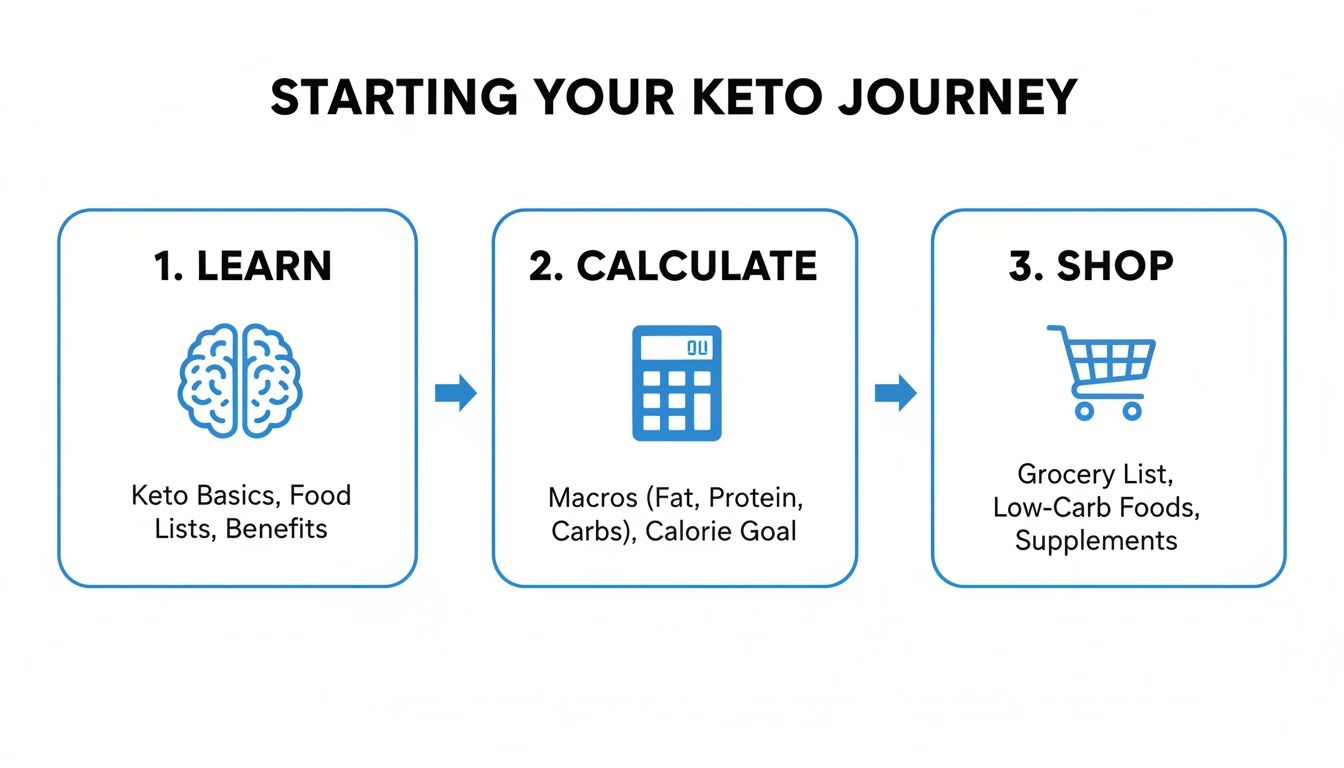
Essentially, you start by understanding the "why," figure out the "how" by calculating your macros, and then get your kitchen ready for success.
Key Principles of Keto
Going keto is more than just ditching bread; it's about being strategic with your macronutrient ratios. Here’s the general breakdown you’ll aim for:
- Fats (70-80%): This is your new primary fuel. We're talking healthy fats from sources like avocado, olive oil, nuts, and fatty fish—like delicious Canadian salmon.
- Protein (15-20%): Protein is vital for maintaining muscle, but you don't want to overdo it. Too much protein can interfere with ketosis, so the goal is to eat just enough.
- Carbohydrates (5-10%): This is where you have to be strict. Aim for under 50 grams of net carbs per day—many people find success going even lower, around 20 grams.
To help you get started on the right foot, think of this checklist as your game plan for day one.
Your Keto Quick Start Checklist
This table guides your initial actions. Following these steps builds a solid foundation for a successful keto journey.
| Action Step | Why It Matters | A Canadian Tip |
|---|---|---|
| Clean Out Your Pantry | Removing tempting high-carb foods like pasta, bread, and sugary snacks is crucial for avoiding slip-ups in the first week. | Check out Canadian grocery stores like Loblaws or Sobeys for their expanding "natural foods" sections, which often have great keto-friendly alternatives. |
| Calculate Your Macros | Knowing your personal fat, protein, and carb targets takes the guesswork out and sets you up for consistent ketosis. | Use an online calculator and set your activity level honestly. Remember, our long Canadian winters might mean less activity than you think! |
| Plan Your First Week | Having a meal plan ready means you won't be left wondering what to eat. This prevents impulse decisions and makes grocery shopping easier. | Look for recipes featuring Canadian staples like salmon, beef, and cheese from local producers. Farmers' markets are a goldmine for fresh, low-carb veggies. |
| Stock Up on Electrolytes | As your body sheds water weight, it also loses essential minerals. Preparing for this helps you avoid the dreaded "keto flu." | You can find high-quality electrolyte supplements right here at SupplementSource.ca to keep your levels topped up—often at clearance prices you won't find anywhere else. |
Getting these initial steps right makes all the difference. It turns what could be a confusing process into a clear, actionable plan.
Building Your First Canadian Keto Grocery List
Alright, you've got your macros figured out, and now it's time to hit the grocery store. Having a well-stocked kitchen is your best defence against caving to old habits. It's the key to making this whole keto thing delicious, satisfying, and sustainable.
Don't worry, navigating your local Loblaws, Sobeys, or farmers' market with a keto mindset is easier than it sounds. The trick is simple: stick to the perimeter of the store where the fresh, whole foods live. Your other new skill will be becoming a pro at reading nutrition labels.
Mastering the Keto Shopping Aisles
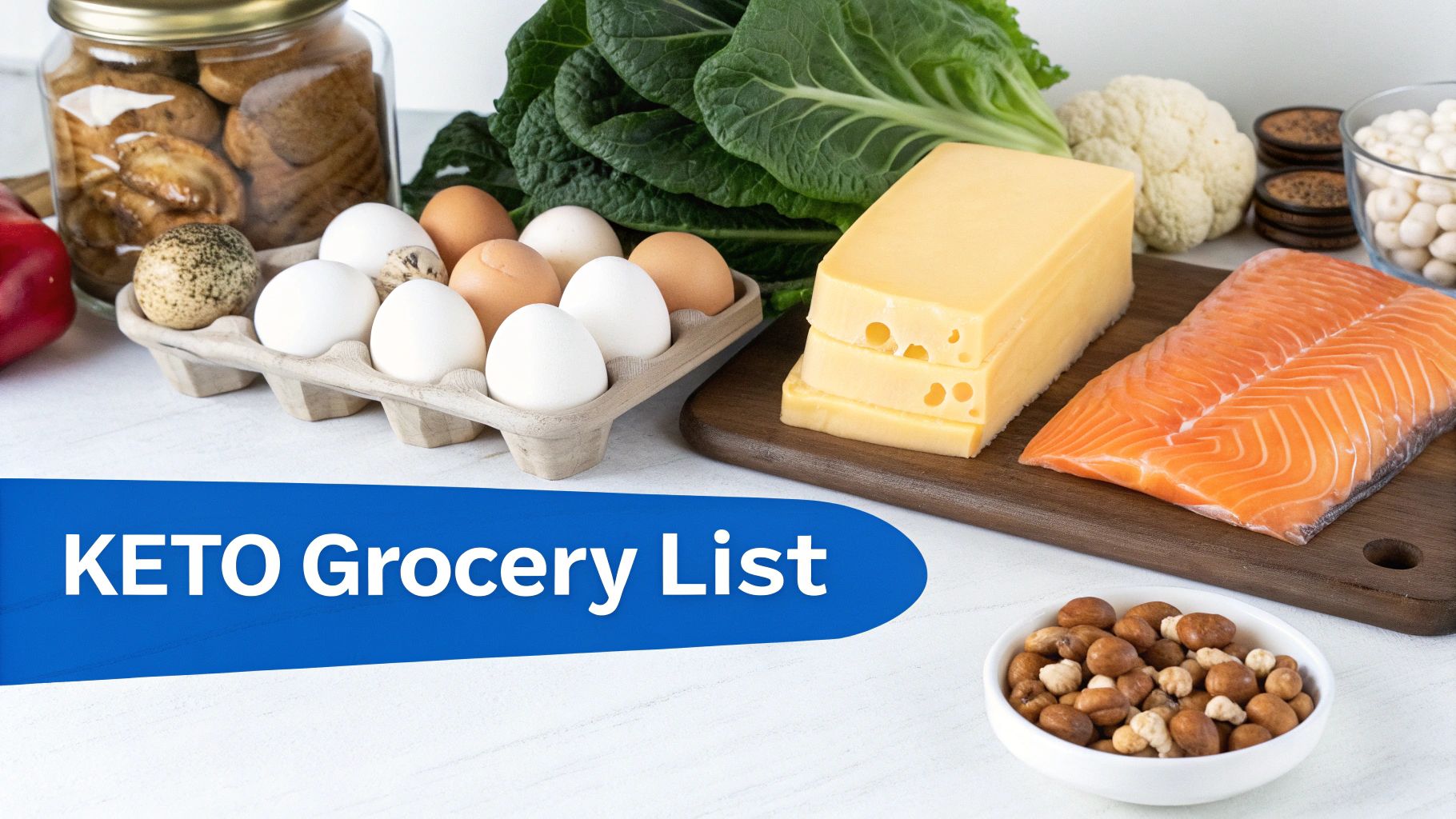
Before you even think about a detailed list, let's break it down into simple categories. Your cart should be filled with high-quality fats, a moderate amount of protein, and plenty of low-carb vegetables.
- Healthy Fats Are Your Foundation: This is your new primary energy source. Think versatile cooking oils like avocado and coconut oil, some good extra virgin olive oil for dressings, and whole-food fats. That means avocados, nuts (macadamias and pecans are incredible choices), and seeds like chia, flax, and hemp.
- Pick Your Protein Wisely: Quality is key here. Go for fatty cuts of meat like ribeye steak or pork belly, poultry with the skin on, and especially fatty fish. Being in Canada, we have amazing access to wild-caught salmon, which is an absolute powerhouse of omega-3s.
- Load Up on Low-Carb Veggies: This is where your essential fibre and micronutrients will come from. The easiest rule of thumb is to stick to vegetables that grow above the ground. We're talking leafy greens like spinach and kale, broccoli, cauliflower, zucchini, and bell peppers.
- Don't Forget Dairy and Eggs: Full-fat dairy is your friend on keto. Stock up on real butter, heavy cream, full-fat cheeses (think cheddar, mozzarella, and goat cheese), and plain, full-fat yogurt. And eggs? They're a keto superstar—affordable, versatile, and the perfect package of protein and fat.
Becoming a Nutrition Label Detective
One of the biggest traps for beginners is hidden carbs. They're lurking in sauces, dressings, and pre-packaged foods loaded with sugar. Your new superpower is scanning the nutrition label for one thing: net carbs.
Pro Tip: Calculating net carbs is easy. Just take the Total Carbohydrates on the label and subtract the Dietary Fibre. If a food has 10g of total carbs and 4g of fibre, you're looking at 6g of net carbs. That's the number that actually impacts ketosis.
Always give the ingredients list a quick scan, too. You're looking for sneaky sugars like dextrose, maltodextrin, or high-fructose corn syrup. If the list is a mile long and filled with words you can't pronounce, it's probably best to put it back on the shelf.
Filling the Gaps and Finding Deals
Even with a perfect grocery run, you might need a few specialty items or convenient snacks to make life easier. That's where we come in. At SupplementSource.ca, we have a massive selection of keto-friendly products to round out your pantry, from MCT oil for your coffee to low-carb snacks for when you're in a pinch. We pride ourselves on having the lowest prices in Canada, and our fast shipping gets everything you need delivered right to your door.
For those times you need a quick protein boost on the go, having the right snack can be a lifesaver. If you're looking for convenient options that won't kick you out of ketosis, check out our guide to the best low-carb protein bars available here in Canada.
Building your first keto grocery list is a huge step. By focusing on whole foods and learning to spot those hidden carbs, you're setting yourself up for a successful—and delicious—keto journey.
Your First Two Weeks: A Sample Keto Meal Plan
The first couple of weeks on keto are where the magic begins. This is the adaptation phase where your body makes the big switch from burning carbs to running on fat.
To make this transition smooth, having a meal plan is a total game-changer. It gets rid of that "what am I supposed to eat now?" panic that can send you reaching for old, carb-heavy comfort foods.
Think of this less as a strict schedule and more as a flexible template. It’s packed with easy-to-make meals using ingredients you can find at any Canadian grocery store. The goal is to show you just how satisfying and diverse keto eating can be.
Week One: Your Keto Kickstart
The focus of your first week is consistency. You’re teaching your body a new way to operate, so sticking to your macros and eating clean is key.
Don't worry about getting fancy; simple, whole-food meals are your best friend right now. They're easy to track and are the surest way to hit your nutritional targets without overthinking it.
Success in the beginning often comes down to structure. Having a simple 7-day plan can make all the difference between feeling overwhelmed and feeling empowered.
Here’s a glimpse of what your first few days could look like:
- Day 1: Kick things off with three eggs fried in coconut oil with a side of bacon. For lunch, whip up a simple tuna salad with full-fat mayo and serve it in crisp lettuce cups. Dinner can be zucchini noodles tossed with pesto and shrimp.
- Day 2: For breakfast, try a keto-friendly smoothie with unsweetened almond milk, a scoop of MCT oil, and a handful of spinach. Lunch could be your leftover zucchini noodles. For dinner, a juicy steak with a generous side of creamy cauliflower mash.
- Day 3: Scrambled eggs with cheese and avocado is a classic for a reason. Lunch can be a big salad with grilled chicken, olive oil dressing, and some crumbled feta. Dinner is a simple but satisfying baked salmon with roasted asparagus.
Week Two: Finding Your Rhythm
By week two, you should be settling in. You might even notice some positive changes, like more stable energy levels and fewer cravings.
Now is a great time to start experimenting with different recipes and flavours. You're building momentum, so keep it going by making your meals enjoyable and interesting.
This is also the perfect time to get into meal prep. Cook a batch of shredded chicken or hard-boil some eggs to have on hand for quick lunches and snacks. It’s a small step that makes a huge difference.
A Quick Word on Snacks: While it's best to stick to your main meals, sometimes you just need a little something extra. Great keto snacks include a small handful of macadamia nuts or almonds, a few cubes of cheese, or some celery sticks with cream cheese.
A Sample 7-Day Canadian Keto Meal Plan
This table lays out a simple, flexible framework for a full week. Don't be afraid to mix and match meals based on what you like and what you have on hand. It’s all about making it work for you.
| Day | Breakfast Idea | Lunch Idea | Dinner Idea |
|---|---|---|---|
| Monday | Scrambled Eggs with Avocado & Bacon | Chicken Salad in Lettuce Wraps | Baked Salmon with Roasted Asparagus |
| Tuesday | Keto Smoothie (Almond Milk, Spinach, MCT Oil) | Leftover Salmon Salad | Steak with Creamy Cauliflower Mash |
| Wednesday | Full-Fat Greek Yogurt with Berries & Nuts | Cobb Salad with Ranch Dressing | Pork Chops with Sautéed Green Beans |
| Thursday | Keto "Bulletproof" Coffee & Hard-Boiled Eggs | Tuna Stuffed Avocados | Shredded Chicken Fajita Bowl (No Tortillas) |
| Friday | Omelette with Cheese, Peppers & Onions | Leftover Fajita Bowl | Bunless Bacon Cheeseburgers with Side Salad |
| Saturday | Keto Pancakes with Butter & Berries | BLT Salad with Creamy Dressing | Roasted Chicken Thighs with Broccoli |
| Sunday | Leftover Keto Pancakes or Eggs & Sausage | Big Chef's Salad with Ham, Turkey & Egg | Zucchini Lasagna with Ground Beef |
This plan is just a starting point. To expand your meal options and keep your journey exciting, check out these 8 Delicious Recipes for Ketogenic Diet Success.
Remember, preparation is everything. Take an hour on Sunday to plan your week, do your grocery shopping, and maybe prep a few ingredients. This simple habit will save you time and stress, making it so much easier to stick with your new way of eating.
How to Beat the Keto Flu and Other Challenges
So, you’re a few days in and suddenly feel like you’ve been hit by a truck. Headache, fatigue, brain fog? Congratulations, you’ve likely met the infamous “keto flu.”
Before you throw in the towel and lunge for a bagel, take a deep breath. This is a completely normal—and temporary—part of your body’s transition. The best part? It's often entirely avoidable with a few simple, practical steps.
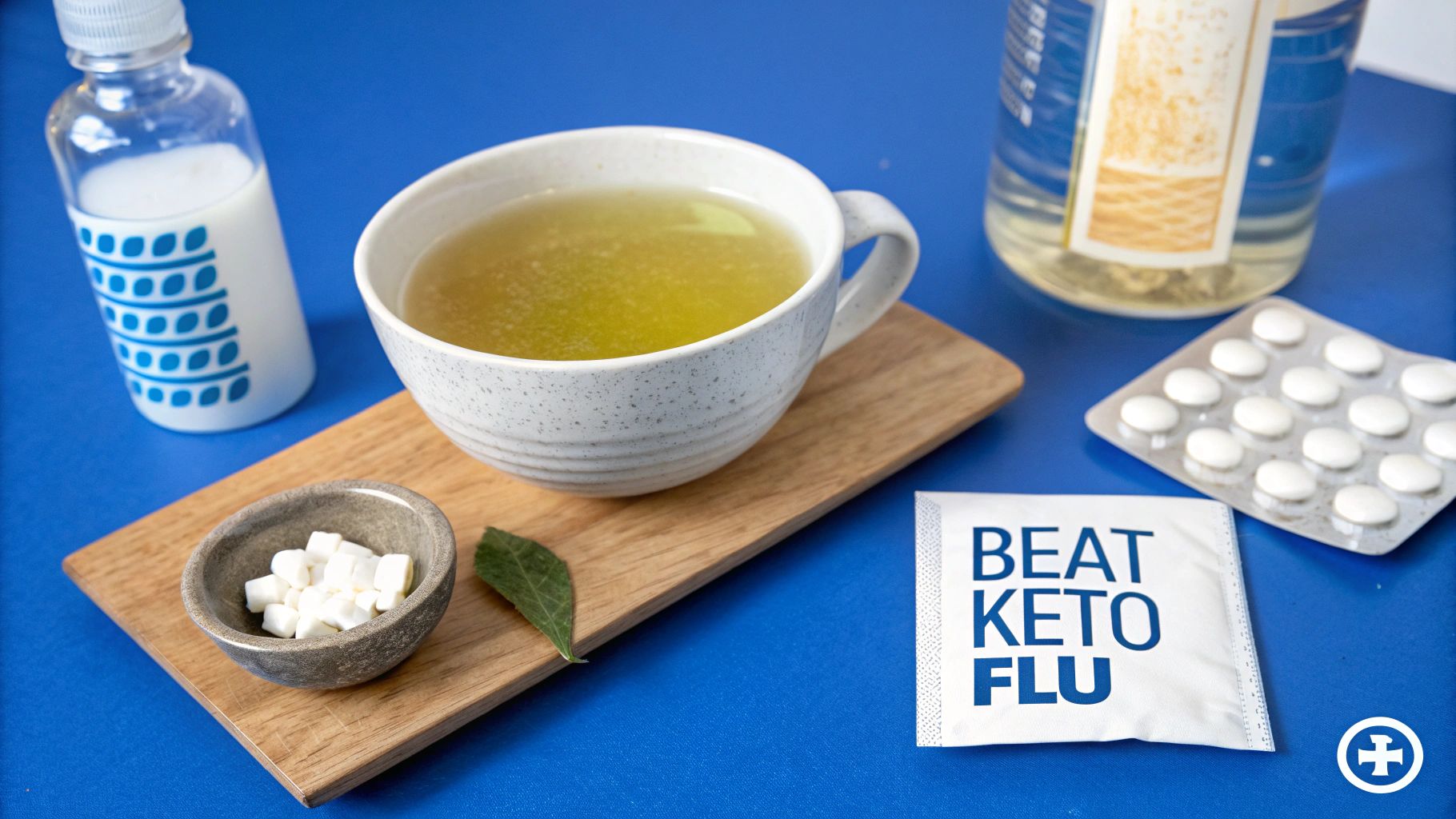
The keto flu isn't a virus. It’s your body’s reaction to a dramatic drop in carbohydrates. As your carb intake plummets, your body burns through its stored glucose (glycogen). For every gram of glycogen you burn, your body flushes out about three to four grams of water. Along with that water go your essential electrolytes, and that mineral imbalance is the real culprit behind those miserable flu-like symptoms.
Your Electrolyte Battle Plan
Your mission, should you choose to accept it, is to proactively replenish these crucial minerals: sodium, potassium, and magnesium. Seriously, forgetting about electrolytes is the number one mistake beginners make.
Don't wait for the headache to kick in. Start managing your electrolytes from day one. Here’s the practical how-to:
- Sodium: Forget what you’ve been told about cutting back on salt. On keto, you need more. Aim for around 5,000 mg per day. An easy way to hit this is by sipping on warm bone broth or just adding a generous pinch of pink Himalayan salt to your water throughout the day.
- Potassium: This mineral works with sodium to keep your body's fluid levels balanced. You'll want about 4,700 mg daily. This is achievable through keto-friendly foods like avocados, spinach, salmon, and mushrooms.
- Magnesium: This one is often the trickiest to get enough of from food alone, but it’s essential for preventing muscle cramps and getting good sleep. Aim for 300-400 mg per day. While nuts and leafy greens are good sources, a supplement is often the most reliable way to hit your target.
The keto diet's popularity is booming in North America, which holds 37.6% of the global market share. With 27% of Canadians being obese as of 2022, mastering electrolytes is a cornerstone of keto success. You can see more on the global ketogenic diet market on Grand View Research.
Choosing the Right Magnesium
Not all magnesium supplements are created equal. Different forms have different jobs and absorption rates. For example, magnesium citrate is great for combating constipation (a common keto side effect), while magnesium glycinate is known for its calming effects and is perfect to take before bed.
To figure out which type is the best fit for your needs, you need to do a little homework. We've made it easy for you in our ultimate guide to magnesium forms and benefits.
Taming Carb Cravings
Let's be real: your body is going to protest the lack of sugar at first. Cravings are normal, but they don’t have to derail you.
The best defence against a carb craving is a good offence. Make sure your meals are packed with enough healthy fats to keep you full and satisfied. An avocado, a handful of macadamia nuts, or a fat-rich meal can often stop a craving in its tracks.
Hydration is also a huge factor. Sometimes what feels like a desperate hunger pang is actually just your body screaming for water. Drink up!
Navigating Social Situations
Eating out with friends or heading to a family dinner can feel like a minefield. But you don’t have to become a hermit. Most Canadian restaurants are far more accommodating than you might think.
My go-to strategy is to check the menu online beforehand and have a game plan. Stick to simple protein and veggie dishes. A steak with a side of broccoli (ask for extra butter!) or a bunless burger with a side salad are almost always safe bets. Don't be shy about asking your server to hold the potatoes or swap the fries for greens. Most places are happy to help.
Smart Keto Supplements to Support Your Journey
While a solid, whole-food keto diet is your foundation, think of supplements as your support crew. This isn't about shortcuts; it's about giving your body the right tools to make the transition into ketosis smoother and more effective.
These supplements are designed to tackle the common hurdles of starting keto, from beating the keto flu to keeping your energy levels high during that initial adaptation phase. Let's break down the most useful additions to your keto toolkit.
Must-Have Electrolytes
We touched on this, but it’s so important it deserves another look. When you cut carbs, your body flushes out water and essential minerals. This electrolyte imbalance is the primary cause of the keto flu.
To feel your best, you need to actively put these minerals back in. A high-quality electrolyte supplement is a simple and effective way to cover your bases.
- What to look for: Seek out a sugar-free electrolyte powder with a balanced blend of sodium, potassium, and magnesium. These are the big three that get depleted most quickly.
- How to use them: Just mix a scoop into your water bottle and sip on it throughout the day. This is especially crucial during your first few weeks and on days you’re training hard at the gym.
MCT Oil for Clean Energy
Medium-Chain Triglyceride (MCT) oil is a keto powerhouse. MCTs are a unique type of fat that your body absorbs rapidly and sends straight to your liver. There, they're converted into ketones for a quick source of brain and body fuel.
Think of it as an express lane to energy. Adding MCT oil to your morning coffee or smoothie can help boost your ketone levels, sharpen your mental focus, and keep cravings at bay.
Getting Started with MCT Oil: Start with a small dose, like one teaspoon, to see how your stomach handles it. You can gradually work your way up to a full tablespoon as your body adapts. Going too hard too soon can lead to digestive upset.
High-Quality Protein Powders
Meeting your protein goals on keto is critical for preserving muscle mass, especially if you’re lifting weights. The problem is, many protein powders are loaded with carbs and sugar.
This is where a keto-friendly protein powder comes in. A high-quality whey isolate or a beef protein isolate can deliver a clean shot of protein with minimal carbs, making it easy to hit your macros without throwing your diet off track.
At SupplementSource.ca, we have a massive variety of keto-friendly options. To help you choose, we've put together a detailed breakdown of the best keto protein powder.
Your Canadian Supplement Source
Getting your keto support supplements shouldn’t be complicated or expensive. Here at SupplementSource.ca, we’re committed to offering the lowest prices in Canada on a huge range of keto-friendly products.
With our fast, reliable shipping across the country (and free shipping on orders over $99), you can get everything you need delivered right to your door. From electrolyte powders and MCT oils to the perfect low-carb protein, we've got your back on your keto journey.
Common Questions About Starting Keto
Diving into a new way of eating brings up questions. When it comes to starting the keto diet, a few things pop up time and time again. Let’s clear up some of the most common uncertainties with practical, straightforward answers.
How Do I Know If I'm in Ketosis?
This is the big one. You're putting in the work, so how can you tell if your body has flipped the switch to burning fat? There are a few ways to check, ranging from cheap and easy to highly precise.
-
Urine Strips: These are the first stop for most beginners. You can find them at most Canadian pharmacies, and they're inexpensive. They're great for that initial confirmation, but they can become less reliable over time as your body gets more efficient at using ketones instead of just excreting them.
-
Blood Ketone Meters: For the most accurate reading, a blood meter is the gold standard. It works just like a blood glucose meter, using a tiny blood sample to measure the exact concentration of ketones in your bloodstream. A reading between 0.5 to 3.0 mmol/L is the sweet spot for nutritional ketosis.
-
Physical Signs: Your body also drops some big hints! Many people notice a surge in energy, sharper mental focus, and a major drop in cravings. Sometimes, you might also notice a distinct "keto breath," which can smell a bit fruity or metallic. These are all good signs that you're successfully in ketosis.
Can I Still Exercise on a Keto Diet?
Absolutely. In fact, many people find their endurance improves once they become fully keto-adapted.
That said, your performance might feel a little sluggish for the first couple of weeks. As your body switches its primary fuel source, high-intensity workouts can feel a lot tougher. This is totally normal and temporary.
The key is to listen to your body. Stay on top of your hydration and electrolytes, and maybe dial back the intensity a little during that initial adaptation phase. Once you're fully fat-adapted, you might be shocked by the steady, sustained energy you have during long workouts.
What If I Have a Cheat Meal?
Look, life happens. You're at a party, a holiday dinner pops up, or you just have a craving that won't quit. A single off-plan meal isn't going to erase all your progress. The most important thing is to avoid the "all-or-nothing" trap.
Don’t let one cheat meal spiral into a cheat week. Acknowledge it, enjoy it, and then get right back on your keto plan with your very next meal. Drink plenty of water, maybe add a little extra salt to help with any bloating, and just move on. It’s that simple.
Getting back on track quickly is what matters for long-term success. Your body will shift back into ketosis within a day or two of you returning to your low-carb lifestyle.
Is Keto Safe for the Long Term?
The long-term effects of a ketogenic diet are still being studied, but one thing is crystal clear: the quality of your keto diet matters immensely. A diet built around processed meats and cheeses will have vastly different health outcomes than one focused on whole foods like avocados, salmon, nuts, and leafy greens.
For any significant dietary change, especially one you plan to maintain, it’s always a good idea to chat with a healthcare professional. They can help you monitor key health markers and make sure the diet is a good fit for your individual needs.
No matter where you are in your journey, having the right support makes all the difference. For all your keto-friendly supplements, snacks, and pantry staples at the guaranteed lowest prices in Canada, SupplementSource.ca has you covered. Explore our huge selection and get fast, reliable shipping on everything you need to succeed.