

Net Carbs Vs Total Carbs: Your Complete Guide for Keto & Beyond
Ever feel like you need a degree in nutrition just to read a protein bar label? You're not alone. The whole "net carbs vs total carbs" thing can seem confusing, but the main difference is actually pretty simple. Total carbohydrates count every single gram of sugar, starch, and fibre. On the other hand, net carbs only represent the carbs your body actually digests and turns into energy.
If you're tracking your macros—especially on a keto diet here in Canada—getting a handle on this distinction is the secret weapon for getting the results you want. Let's break it down.
Decoding The Difference: Net Carbs Vs. Total Carbs
When you look at a Canadian nutrition label, that "Carbohydrate" line tells the whole story—it bundles every starch, sugar, and fibre molecule into one number. That’s your total carbs count, plain and simple.
But here’s the thing: not all carbs are created equal. Your body treats them very differently. Some, like sugars and starches, get broken down into glucose, which can spike your blood sugar and knock you out of ketosis. Fibre, however, pretty much passes right through your system without being digested.
This is where net carbs enter the picture. This number gives you a much more realistic idea of the carbs that will actually impact your body's metabolic state. For anyone trying to stay in ketosis, manage blood sugar, or just follow a low-carb lifestyle, it's the number that truly matters.
Thankfully, here in Canada, our nutrition labels make the math easy. Canadian labelling standards require fibre to be listed separately under total carbohydrates, so you can quickly figure out the net amount. If a product has 23 grams of total carbs and 3 grams of fibre, you're really looking at 20 grams of net carbs.
Understanding this difference is the first step to mastering your macros. If you're just getting your feet wet, our guide on how to start a keto diet is a great place to build your foundation.
Quick Comparison: Total Carbs Vs. Net Carbs
For a quick breakdown, here’s how the two carb counts stack up against each other.
| Attribute | Total Carbs | Net Carbs |
|---|---|---|
| What It Includes | All carbohydrates: sugars, starches, and fibre. | Digestible carbs that impact blood sugar. |
| Primary Use | General nutritional information; required on all labels. | Tracking for keto, low-carb diets, and blood sugar management. |
| Calculation | The number listed directly on the nutrition label. | Total Carbs - Fibre (- certain Sugar Alcohols). |
| Impact on Body | Represents the entire carb content of a food. | More accurately reflects the carbs that provide energy. |
Think of total carbs as the big picture and net carbs as the actionable detail—the number that tells you what your body is actually going to use.
The Simple Math Behind Calculating Net Carbs

Alright, let's get practical and break down that nutrition label. It's not as complicated as it looks. Calculating net carbs is way easier than you think, and once you get the hang of it, you’ll be able to size up any food in seconds.
The whole idea is to subtract the carbs your body doesn't really digest from the total amount. Since fibre just passes through your system without getting turned into glucose, it doesn't count toward the carbs that actually impact your body.
The Basic Net Carb Formula
At its core, the calculation is dead simple:
Total Carbohydrates – Dietary Fibre = Net Carbs
So, if a low-carb wrap has 15g of Total Carbs and 10g of Fibre, the math is straightforward: 15g - 10g = 5g of Net Carbs. That’s the number you’d actually track for your keto or low-carb diet. For more tips on figuring out your daily limits, check out our guide on how many carbs you can have on keto.
But hang on, there's another player in the game, especially when you're looking at low-carb snacks and protein bars.
Adding Sugar Alcohols to the Mix
You’ve probably seen ingredients like erythritol, xylitol, or maltitol on the labels of keto-friendly treats. These are sugar alcohols, a type of carb that our bodies don't absorb well, meaning they have a tiny impact on blood sugar.
Because of this, you can often subtract them from the total carb count, just like you do with fibre. The most common one you'll see is erythritol, which has a near-zero effect on blood sugar.
So, the expanded formula becomes:
Total Carbohydrates – Dietary Fibre – Sugar Alcohols (like Erythritol) = Net Carbs
Let's put this into a real-world scenario. Imagine you grab a popular keto protein bar from SupplementSource.ca. You flip it over and see this on its Canadian nutrition label:
- Total Carbohydrates: 22g
- Dietary Fibre: 9g
- Erythritol (Sugar Alcohol): 8g
Let's do the math, step-by-step:
- Start with the total carbs: 22g
- Subtract the fibre: 22g - 9g = 13g
- Subtract the erythritol: 13g - 8g = 5g
Boom. Despite the label shouting 22g of total carbs, the bar only has 5g of Net Carbs. That's a huge difference—one that can easily keep you on track with your goals. Mastering this simple equation lets you look past the big numbers on the front of the package and understand exactly what you're fuelling your body with.
How to Read Canadian Food Labels for Carb Counting
Ever been on vacation in Europe, grabbed a protein bar, and noticed the nutrition label looks... off? You're not seeing things. Nutrition labelling isn't the same everywhere, and knowing how the Canadian system works gives you a massive advantage when you're counting carbs.
Here in Canada, our labels stick to the North American standard. When you see Total Carbohydrates, that number is the whole shebang—starches, sugars, and fibre all rolled into one. This means it's on you to do the quick math and subtract the fibre to figure out the net carbs.
Honestly, this extra step is a huge win if you're serious about your diet. It gives you full control and a crystal-clear picture of what you're actually putting into your body.
Why Canadian Labels Put You in the Driver's Seat
Over in the European Union, most labels do the work for you. They list the digestible carbs separately, so the number you see is basically the net carb count already. It might sound handy, but the Canadian method actually makes you a smarter consumer.
Because you have to subtract the fibre yourself, you're forced to look closer at the quality of the carbs you're eating. You're not just glancing at one number; you’re actively checking out the fibre content, which is a big deal for digestive health and keeping you feeling full.
This hands-on approach is a game-changer. Fitness enthusiasts in Canada tend to develop a sharper eye for macros simply because our system demands it. You quickly learn to spot high-fibre gems and sidestep products that only look low-carb on the surface.
A Quick Look at Carb Counting Around the World
The differences don't just stop with where fibre is listed. Canada's way of doing things is quite different from many places, giving us a unique edge. In regions like the European Union and Mexico, the "total carbohydrate" number on the label has already had the fibre removed. Even calorie counts are handled differently; Canada counts fibre as 4 calories per gram, while many other countries only value it at 2 calories per gram. You can learn more about how these global standards vary and what that means for your diet.
This distinction means that when you’re shopping for keto snacks or low-carb protein powders on a Canadian site like SupplementSource.ca, you can be confident the labels are giving you all the pieces of the puzzle. You have everything you need to make the right calculation for your goals. You're not just grabbing a product off the shelf; you're making an informed choice, backed by a clear and consistent labelling system.
When To Track Net Carbs And When To Track Total Carbs
So, which number should you actually focus on? The short answer is: it depends entirely on your goals. The battle of net carbs vs. total carbs isn't about which one is "better," but which one is the right tool for your specific job.
Making the right choice here is the difference between spinning your wheels and seeing real, tangible progress. Let's break down the most common scenarios to help you decide.
Focus on Net Carbs for Most Goals
For the vast majority of us, especially in the world of fitness and weight management, net carbs are the most practical metric to track. This approach gives you a more accurate picture of the carbohydrates that will actually be used for energy and impact your blood sugar levels.
You should prioritize tracking net carbs if your primary goal is:
- Strict Ketogenic Diet: This is non-negotiable. To stay in a state of ketosis, you need to keep your digestible carb intake extremely low, typically under 25-30g per day. Net carbs are the only number that matters here.
- General Weight Management: Focusing on net carbs encourages you to eat more high-fibre foods. These foods keep you feeling fuller for longer, which is a massive advantage when you're in a calorie deficit.
- Managing Blood Sugar: Since net carbs reflect what will be converted to glucose, tracking them is essential for anyone looking to maintain stable blood sugar and energy levels throughout the day.
When Total Carbs Take Priority
While net carbs are king for keto and general low-carb diets, there are specific situations where keeping an eye on total carbs is more important. This is usually when overall fuel intake or digestive health is the main concern.
Consider tracking total carbs if you are:
- An Endurance Athlete: If you're carbing up for a marathon or a long-distance cycling event, your body needs to maximize its glycogen stores for fuel. In this case, total carbohydrate intake is a more relevant metric for ensuring you're consuming enough energy to perform.
- Managing Digestive Health: For individuals with certain digestive sensitivities, tracking total fibre intake (a component of total carbs) is crucial. Knowing your total carb count helps you monitor and adjust your fibre consumption for better gut health.
This flowchart simplifies how to approach carb counting depending on where your food label is from.
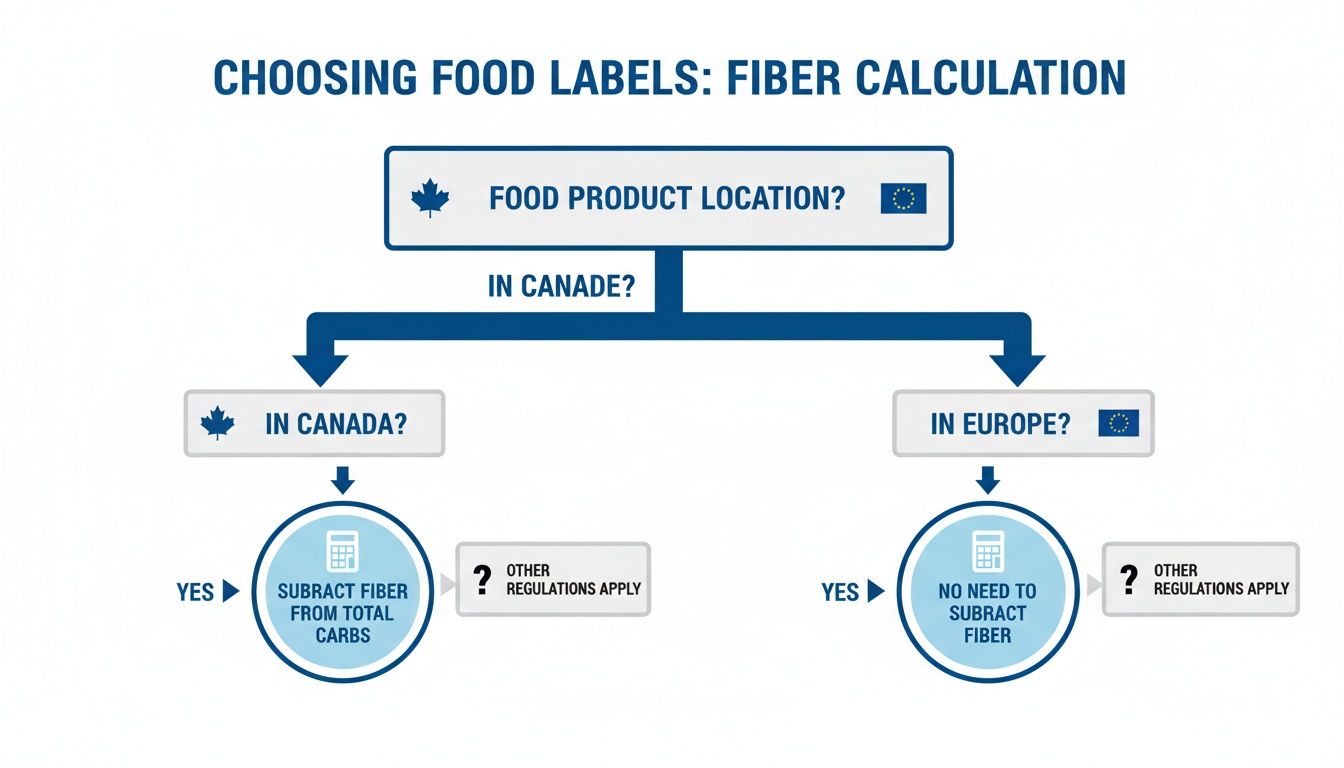
The key takeaway here is that Canadian labels require you to do the simple subtraction, putting you in control of your macro tracking.
Choosing Your Carb Tracking Method By Goal
To make it even simpler, here's a quick guide to help you decide which number to watch based on your specific objectives.
| Your Primary Goal | Which Carb To Track | Why It Matters |
|---|---|---|
| Strict Ketogenic Diet | Net Carbs | Staying in ketosis requires keeping digestible carbs—the ones that impact blood sugar—as low as possible. |
| General Weight Loss | Net Carbs | This method encourages high-fibre foods, which promote satiety and help you stick to a calorie deficit. |
| Blood Sugar Control | Net Carbs | Net carbs directly reflect the carbs that will be converted to glucose, making them the most relevant for managing blood sugar. |
| Endurance Performance | Total Carbs | Athletes need to maximize glycogen stores for fuel. Total carbs provide the best measure of overall energy intake. |
| Digestive Sensitivities | Total Carbs | This allows you to monitor total fibre intake, which is essential for managing certain gut health issues. |
Ultimately, there's no single "correct" way to track carbs for everyone. The best method is the one that aligns with your body's needs and helps you achieve your health and fitness goals most effectively.
Choosing The Right Low Carb Supplements And Snacks
Alright, you've mastered the math. Now comes the fun part: stocking your pantry with fuel that actually supports your goals. Navigating the supplement aisle can feel like a minefield, but with a sharp eye on the nutrition label, you’re already way ahead of the game.

This is where you get to be strategic. Whether you're hunting for a post-workout shake or a mid-afternoon snack to beat the slump, knowing what to look for makes all the difference. At SupplementSource.ca, we see firsthand how Canadians are using smart supplement choices to absolutely crush their fitness targets.
Finding Your Perfect Protein Powder
Protein powder is a staple in most fitness routines, but not all tubs are created equal when it comes to carbs. If you're aiming for the lowest possible carb count, your best bet is almost always a whey protein isolate.
Isolates go through an extra filtration process that strips out most of the lactose (milk sugar) and fat. The result? A purer protein that’s incredibly low in carbs. A typical whey concentrate might have 3-5 grams of carbs per scoop, while a high-quality isolate can have as little as 0-1 gram. That small difference adds up fast, especially if you're on a strict keto diet.
Smart Snacking For Low-Carb Lifestyles
You're halfway through the workday, and that 3 PM craving hits hard. Having the right snacks on hand is the secret to staying on track. The market is flooded with "keto-friendly" bars and treats, but your new label-reading skills will help you separate the champs from the chumps.
Here’s what to look for when choosing low-carb fuel:
- Sweetener Source: Keep an eye out for products sweetened with stevia, monk fruit, or erythritol. These have a minimal impact on blood sugar and are your best friends on a low-carb diet.
- Fibre Content: High-fibre bars not only have lower net carbs but also help keep you feeling full and satisfied. That's a huge win when you’re managing your intake.
- Healthy Fats: Great keto snacks often include healthy fat sources like MCT oil, nuts, or seeds to provide sustained, clean-burning energy.
If you need some inspiration, our guide on the best low-carb protein bars breaks down some of our top picks available right here in Canada.
The real power comes from making informed choices. Instead of grabbing a product because of a "keto" sticker on the front, you can now flip it over and know with confidence if its macros work for you.
When picking out beverages or quick boosts to complement your diet, consider alternatives like sugar-free energy drinks to stay aligned with your carb goals.
Shopping Smart And Saving Money
Building the perfect low-carb supplement stack doesn't have to break the bank. Because we're a Canadian company, we get it—you want quality products at the best prices, shipped fast from a warehouse right here in Canada.
One of the best-kept secrets for savvy shoppers is our massive clearance section. You can often find top-tier, low-carb proteins and snacks at ridiculously low prices, simply because they're short-dated or overstocked. It's the perfect way to try new brands and stock up on your favourites without stretching your budget, all with our reliable, fast Canadian shipping.
Your New Action Plan
Let's wrap this up. Getting the hang of net carbs versus total carbs isn't just a bit of nutrition trivia—it's how you take real control over your diet. Now you have the know-how to grab any product in Canada, flip it over, and see exactly how it stacks up against your goals.
Whether you're pushing for ketosis, carefully adding muscle, or getting lean for summer, you can finally choose your foods and supplements with confidence. You won't have to second-guess if that "keto-friendly" bar is actually what it claims to be.
The Real Impact on Your Body
Here’s the bottom line: net carbs give you a much more accurate idea of how a food will actually affect your blood sugar and energy. Total carbs tell part of the story, but net carbs give you the actionable info that really drives results. Nailing this difference is the secret to bringing a new level of precision to your diet, turning guesswork into a solid plan.
I challenge you to start putting this into practice today. Don't even wait for your next trip to the grocery store.
Go grab a few things from your kitchen right now—a protein bar, that tub of yogurt, maybe even a loaf of bread—and do the simple math. Figure out the net carbs and see if it changes how you look at that food.
Making this a habit is what separates the pros from the amateurs. It’ll make you a smarter, more effective athlete.
Once you get comfortable with it, the real fun starts. You can dive into the huge range of low-carb options we have at SupplementSource.ca, knowing you’ve got the expertise to pick what’s right for you. From whey isolates with almost no carbs to killer-tasting keto snacks, our massive selection is backed by the lowest prices in Canada. You’ve got the knowledge—now go get the fuel to match your ambition.
Frequently Asked Questions About Carb Counting
Let's clear up some of the usual questions that pop up once you start digging into the world of net carbs versus total carbs. Nailing these details can make a huge difference in your results.
Are Sugar Alcohols Really Free Carbs?
Not always, and this is a critical point to understand. While some sugar alcohols like erythritol have almost no impact on blood sugar and can pretty much be fully subtracted, others aren't so simple. Maltitol, for instance, is partially digested and can definitely raise blood sugar levels, which could be a deal-breaker for someone on a strict keto diet.
The best approach here is to be a bit cautious with products loaded with sugar alcohols other than erythritol. Pay close attention to how your own body responds, because individual reactions can vary a lot.
Does Fibre Count Towards My Daily Calories?
Yes, but it's a bit of a grey area. In Canada, nutrition labels typically calculate fibre at 4 calories per gram—the same as other carbohydrates. The thing is, your body doesn’t actually absorb all those calories because fibre isn’t fully digestible.
This is exactly why high-fibre foods are so fantastic for weight management. They help you feel full without giving you as much usable energy as sugars or starches, which is a massive help when you're trying to stick to your goals.
Why Can't I Just Look For Keto-Friendly On Labels?
While "keto-friendly" is a handy marketing term, it's not a regulated claim in Canada. A product might be lower in carbs than the original version, but it could still have enough to kick you out of ketosis or throw your daily macros way off.
Your best strategy is to always ignore the claims on the front of the package. Instead, use your new skills to flip it over and read the Nutrition Facts table yourself. This is the only way to guarantee a product truly fits your specific dietary needs.
Ready to put your knowledge to the test? At SupplementSource.ca, we've got a massive selection of low-carb proteins, keto-friendly snacks, and performance supplements to fuel your goals. Explore our huge variety and enjoy the lowest prices in Canada. Shop Now.
Meta Description: Confused about net carbs vs total carbs? Our guide breaks down how to calculate net carbs on Canadian food labels for keto, weight loss, and performance.